
Ehrlich: Partisan divide over DHS funding may result in a brief ‘partial shutdown’
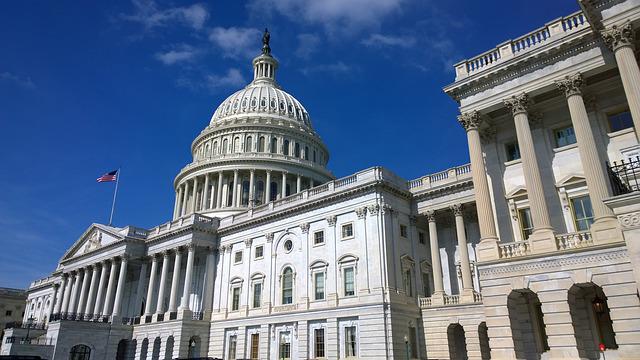
Former Maryland governor Robert L. Ehrlich Jr. said that intense partisan gridlock on Capitol Hill over funding for the Department of Homeland Security (DHS) may lead to a brief shutdown of that agency-as funding is set to expire after midnight on Friday.

“I think that there may be a partial shutdown. But, I think it will not be long-lasting. And I suspect that the bottom line will be another CR (continuing resolution) with regard to DHS,” Ehrlich, a Republican, who served as the state’s chief executive from 2003-07, told Baltimore Post-Examiner.
Ehrlich, 68, has extensive legislative experience.
He served in the Maryland House of Delegates from 1987-95 and the U.S. House of Representatives from 1995-03.
Ehrlich made the remarks in an exclusive interview on Wednesday in which he discussed the broader debate over illegal immigration: sanctuary cities, raids by ICE (Immigration and Customs Enforcement), legislative action taken by the Maryland General Assembly to limit state and local cooperation with federal immigration authorities, and a congressional proposal to require voter ID, which Republicans say is aimed at preventing both voter fraud and undocumented immigrants from voting.
President Donald Trump signed a $1.2 trillion funding bill into law last week. That ended a four-day partial government shutdown in which nearly three-quarters of federal agencies experienced a funding lapse.
Ninety-six percent of the government is now funded through the end of September.
The outstanding four percent relates to funding for DHS, as the legislation to reopen the government only included money to fund the agency for two weeks.
Democratic lawmakers are digging their heels in and have insisted on broad reforms for DHS in exchange for the votes to fund the agency. Many have said they are opposed to a stopgap measure to buy more time for negotiations.
Senate Majority Leader John Thune (R-S.D.) said Wednesday that senators will vote if and when a deal is reached. Thune asked that lawmakers keep their schedules flexible.
Both the House and Senate are scheduled to be on recess next week.
Also, next week many lawmakers are expected to attend a security conference in Munich, Germany.
So, if DHS does shut down, it could last for a week or longer.
Below is an edited excerpt of the interview:
BPE: Congress has passed 11 of the 12 appropriations bills that fund the government each year. All that remains is DHS. Democrats have listed a series of demands in exchange for their support for funding the agency. They include: prohibition of masks, mandating judicial warrants for arrest, an end to sporadic roundups, and essentially a hands-off approach to sanctuary cities. What do you make of these demands in light of the fact that ICE is already funded for four years due to Trump’s Big Beautiful Bill?
Ehrlich: Most of those obviously are non-starters. I think body cameras are not a non-starter. I think Republicans would support that. If there is anything that is negotiable there, that would certainly be one. I am not sure if there are any others. The bottom line here is the Democrats simply want to slow down immigration enforcement. That is where they are. That is the hill that they have chosen to fight on. And I don’t think that that is the hill that the American people would wish them to fight on.
BPE: Do you think that much of the hardball talk coming from Senate Minority Leader Chuck Schumer and House Minority Leader Hakeem Jeffries is about playing to their base ahead of the midterm elections later this year?
Ehrlich: I think that the progressive wing of the party is ascendant. It is controlling the agenda. They are reflecting the dominant wing of the party. That is for sure. All you have to do is go back a few years-not many-to the Clinton years or the Obama years. And this is a very different position on illegal immigration.
The Democratic Party has moved far-left from the Obama years. The progressive wing is ascendant. They are dictating this position. And the traditional liberals like Schumer are simply going along with it. As a matter of substance, this is where they are. As a matter of politics, it is also where they are. They view this as a winning issue for the midterms.
BPE: Democrats often argue that because immigration enforcement is a federal responsibility, local law enforcement should not have to notify federal authorities about the immigration status of inmates. Does this argument have any merit? Why or why not?
Ehrlich: No! Everybody knows that just a modicum of cooperation-and Minneapolis doesn’t happen! Because the modicum of cooperation is a simple courtesy call from the local officials to the feds: ‘Hey! Person X is here. You have a detainer. Come to the local jail. Pick him up. Done!’ No riots. No problems in the neighborhoods. None of this. It is cooperation. I think sanctuary cities cause a lot of problems. Ultimately, it makes the streets less safe.
BPE: President Trump recently made the decision to reduce the number of ICE agents in Minneapolis following mass protests that were preceded by the deaths of two American citizens at the hands of agents. What do you make of the President’s decision and what are the possible repercussions of such a move?
Ehrlich: Part of the reason is that [White House Border Czar] Tom Homan has made some progress. You don’t need this amount of personnel if you are actually getting this done in local jails or the state prison. You are honoring detainers. You only need a handful of agents, whereas if you are going out into the neighborhoods with raids-you need a lot of agents. It is as much a function of success than anything else.
BPE: The Maryland General Assembly has passed legislation that prohibits local jurisdictions from entering into contract programs with federal immigration authorities. A handful of county sheriffs have suggested that they may nevertheless continue to work with ICE. How do you see this playing out?
Ehrlich: It is going to go to the courts. When the progressives are ascendant, you get stuff like this as a result. In a deep-blue state like Maryland with a very-very left-leaning-especially the House of Delegates. I think it is unfortunate. It makes us more unsafe. And it is the politics of the midterms as well.
BPE: The House of Representatives is considering legislation to require photo ID as prerequisite for voting. Democrats say this is unnecessary and may result in mass voter disenfranchisement. Republicans argue the legislation is necessary both to prevent voter fraud and prevent illegal immigrants from voting. Polls indicate that there is overwhelming public support for vote ID requirements. Still, given the intense partisan divide, do you think it could ever become law at the national level?
Ehrlich: No. Because despite what their constituents think, progressive Democrats are clinging to this issue. They are not going to give up. Despite all evidence to the contrary. States that have passed voter ID see greater voter participation, which just kills all of their arguments. There is just no evidence to support their position. It is not just against common sense, it is against the evidence. It is against everything. It makes no sense at all.
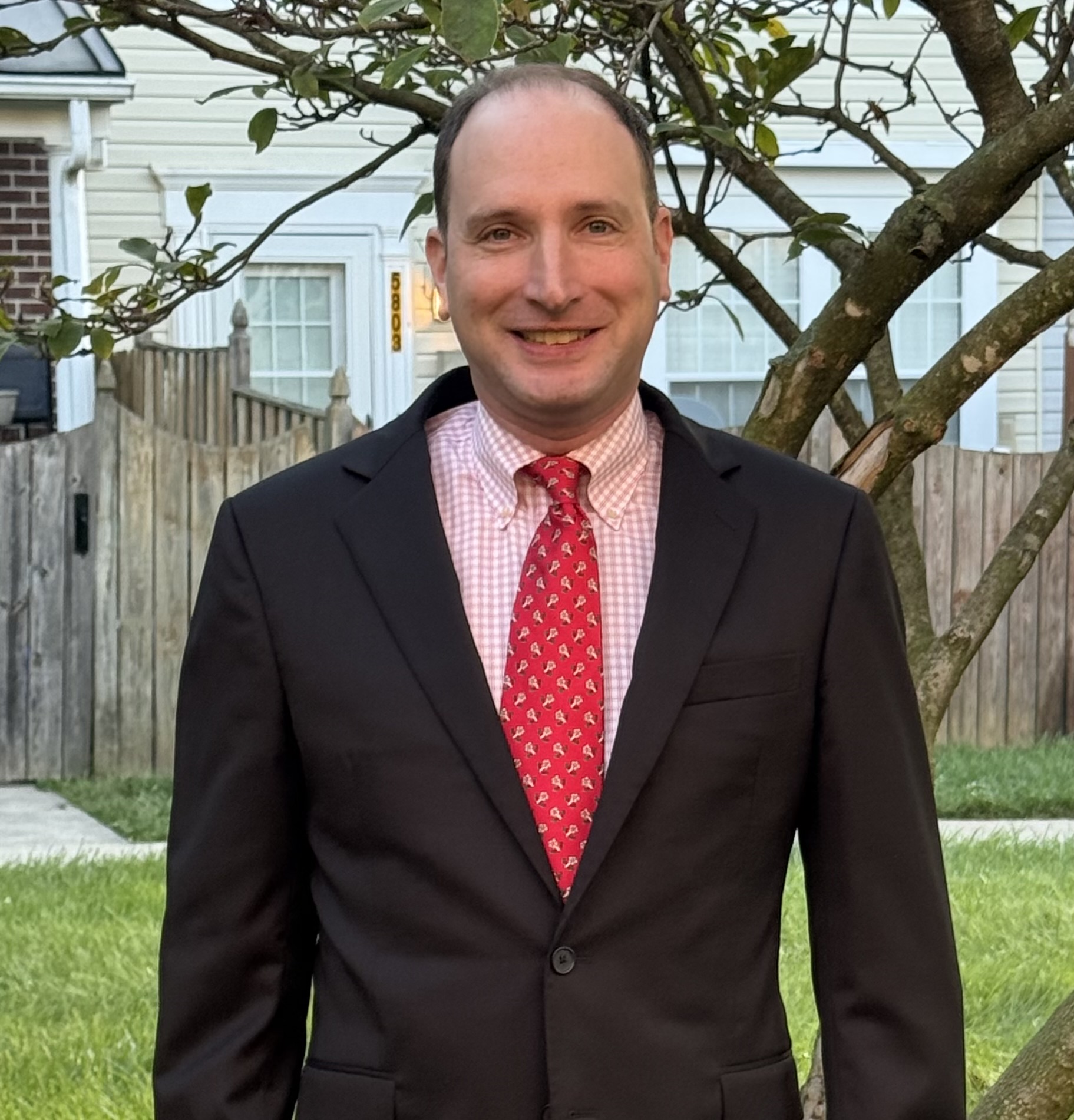
Bryan is the managing editor of Baltimore Post-Examiner.
He is an award-winning political journalist who has extensive experience covering Congress and Maryland state government. His work includes coverage of the first election of President Donald Trump, the confirmation hearings of Supreme Court Justice Brett Kavanaugh and attorneys general William Barr and Jeff Sessions, the Maryland General Assembly, Gov. Larry Hogan, and the COVID-19 pandemic.
Bryan has broken stories involving athletic and sexual assault scandals with the Baltimore Post-Examiner.
His original UMBC investigation gained international attention, was featured in People Magazine and he was interviewed by ABC’s “Good Morning America” and local radio stations. Bryan broke subsequent stories documenting UMBC’s omission of a sexual assault on their daily crime log and a federal investigation related to the university’s handling of an alleged sexual assault.
This is an exquisite interview by BPE’s Renbaum, who asks the pertinent questions and elicits the responsive answers from Gov. Ehrlich that address and reveal the illogic in the Democratic positions.
Citing the issues of sanctuary cities, raids by the legally enfranchised ICE (Immigration and Customs Enforcement), the inexplicable legislative actions taken by the Maryland General Assembly to curtail state and local cooperation with federal immigration authorities, and the utterly unfathomable opposition to require voter ID, the Governor hits home with argument after argument.
This fine interview should be used going forward by reporters as a touchstone for questioning Democrats about their public policy stances.
Good show, reporter Renbaum and Gov. Ehrlich.
Richard Vatz, Ph.D.