
Does US intervention in Venezuela represent a return to the Monroe Doctrine?
For more than two centuries, U.S. foreign policy has stipulated that any threat to the nation’s self-interest that arises in the American hemisphere justifies intervention by Washington.
President James Monroe first espoused that policy in 1823 to deter European powers from getting involved in Latin American affairs. It later came to be known as the “Monroe Doctrine.”
The policy has been reinterpreted by successive administrations since the late-nineteenth century, and its legality often has been called into question by many on the international stage.
President Donald Trump more or less asserted the Monroe Doctrine as justification for the recent operation to capture and arrest accused narcoterrorist and Venezuelan president, Nicolas Maduro. Trump coined it the “Donroe Doctrine.”
Maduro and his wife, Cilia Flores, were arraigned in a Manhattan federal court on Monday on drug trafficking and weapons charges. They have pleaded not guilty to the charges. Maduro told the court that he believes he is still the legitimate leader of Venezuela.
Trump has said the U.S. will run Venezuela and take control of its vast oil reserves until a new leader has been found to govern the approximately 30 million strong South American nation.
It remains unclear whether that will be Venezuela’s vice president, who is a hard-line communist-or the opposition party’s candidate- or someone else.
The conflict with Caracas is years in the making but most recently played out as a shooting war over boats believed to be bringing large quantities of illegal narcotics into the U.S.
It now sounds to many to be somewhat reminiscent of Washington’s deposition and capture of narco-dictator and Panamanian military ruler Manuel Noriega more than three decades ago.
In 1989, President George H.W. Bush sent U.S. military forces to Panama to remove Noriega from power.
Unlike Maduro, who is a socialist or arguably a communist, Noriega had been a U.S. intelligence asset years prior to his capture.
But as the Cold War came to a close, Washington had grown impatient with Noriega’s authoritarian regime, its penchant for drug trafficking, and the dictator’s refusal give up power.
So Noriega was ousted. He would spend the rest of his life serving prison terms in the U.S., France, and his native Panama, before dying of complications related to surgery to treat a brain tumor in 2017.
The decades since Noriega’s ouster saw the birth of the post-9/11 world.
U.S. foreign policy is now primarily focused on the Middle East, fighting radical Islamic terrorism, and preventing rogue regimes like Iran and North Korea from acquiring nuclear weapons.
Cold War priorities now seem like a distant memory.
The Trump administration is taking an active role in trying to broker a peace deal between Washington’s former archenemy, Russia, and Ukraine-despite Moscow’s unprovoked invasion of that country just four years ago.
But closer to home, some argue the Maduro affair represents an important foreign policy shift that may prioritize dealing with threats in the American hemisphere over those that manifest overseas.
Is that what “America First” means under Trump 2.0? Is the “Donroe Doctrine” a return and/or a recalibration of the Monroe Doctrine?
“There is a recently published [National Security Strategy] document that is basically like the ‘Trump Doctrine,’ where Latin America is going to loom very large,” said Marcio Siwi, an associate professor of history at Towson University.
Siwi, whose areas of expertise includes Latin American studies, said U.S. policy in that region would be designed to deter foreign adversaries from threatening American interests-just as was the case under the Monroe Doctrine.
“This (the Maduro operation) may mark the first big action towards the realization of that doctrine.”
Siwi noted that decisive geopolitical shifts often occur over time.
“This administration’s sort-of lukewarm approach toward Ukraine…I think there is a growing understanding among the folks that are in power now that there is a sphere of influence kind-of approach to global power-which is what they want to see. They want to secure the U.S.’ sphere of influence in Latin America.
“They understand that Russia will have their sphere of influence. China will have their sphere of influence…Noriega marked the shift from Cold War [policy] to drug war [policy]. It’s very possible that Maduro’s case is a shift as well. It is a shift towards this more aggressive-going back to those gunboat diplomacy-big stick diplomacy-attitudes of the 1800s.”
Siwi said Trump is constantly trying to redefine “America First” so as to best suit his political base.
“He is expanding this notion of “America First” to the Americas…There will be a lot of MAGA supporters who will push back. But, I think Trump and his emissaries are very aware of that and are therefore shifting a little bit the meaning of what it means to be ‘America First.’ It is gaining a hemispheric proportion. And I think you can begin to see that happening.”
Silvia Escanilla Huerta, a professor of history at University of Maryland Baltimore County (UMBC) and a scholar of Latin America, said it is unclear as to whether the Trump administration is reverting U.S. foreign policy back to the Monroe Doctrine.
“I am not sure if this is a continuation. It might look like that right now, but my impression of the current administration is that they do not have a particular ideology (which the Monroe Doctrine was) when it comes to foreign policy. The latest declarations coming from the White House make it look like the world is up for grabs, depending on how successful certain lobbyists are at promoting their specific interests to the White House.”
Harry Kazianis, who is the publisher and CEO of the foreign policy websites 19FortyFive and National Security Journal, also said he is not sure if the Venezuela incursion represents a significant policy shift.
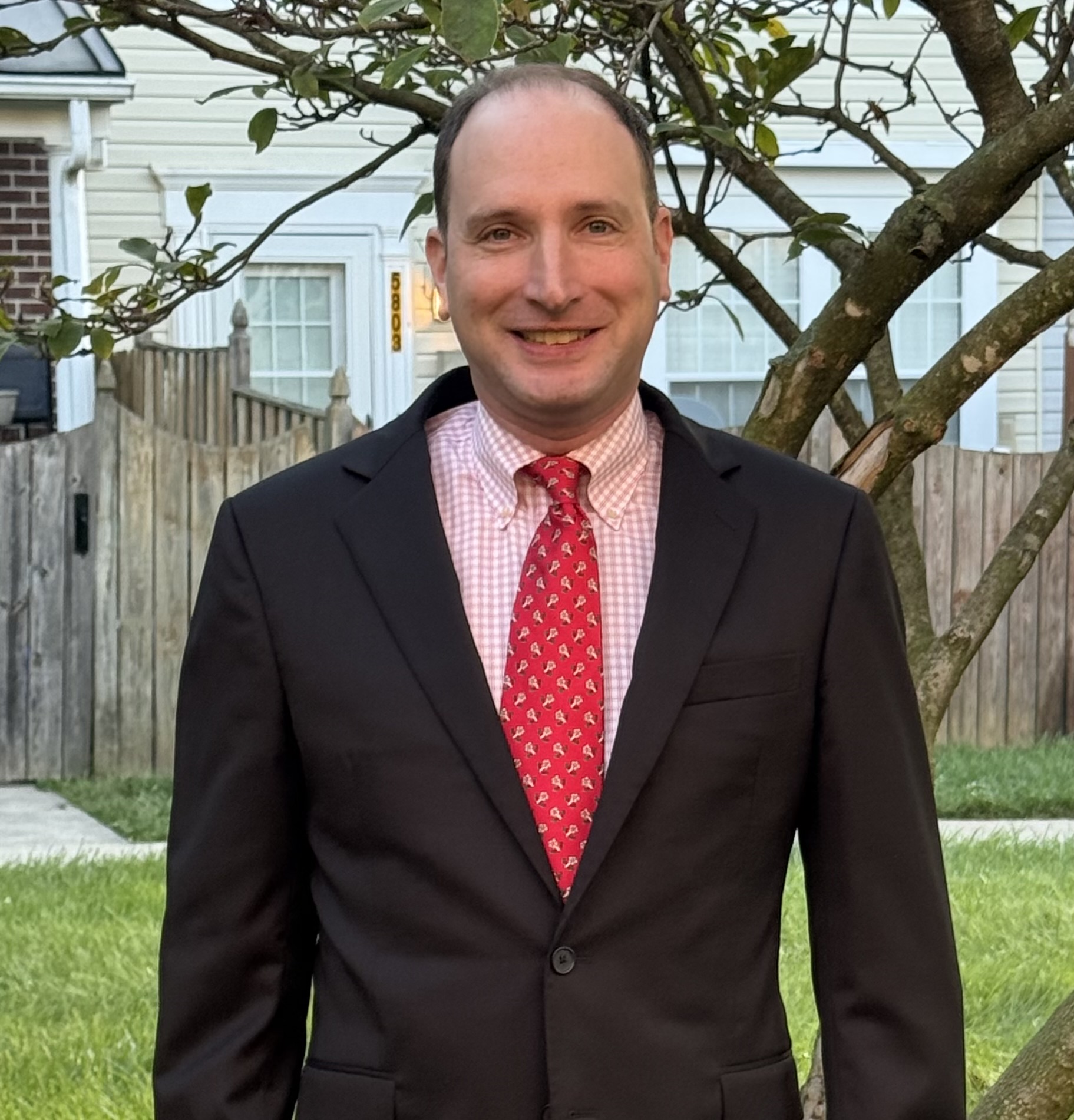
Bryan is the managing editor of Baltimore Post-Examiner.
He is an award-winning political journalist who has extensive experience covering Congress and Maryland state government. His work includes coverage of the first election of President Donald Trump, the confirmation hearings of Supreme Court Justice Brett Kavanaugh and attorneys general William Barr and Jeff Sessions, the Maryland General Assembly, Gov. Larry Hogan, and the COVID-19 pandemic.
Bryan has broken stories involving athletic and sexual assault scandals with the Baltimore Post-Examiner.
His original UMBC investigation gained international attention, was featured in People Magazine and he was interviewed by ABC’s “Good Morning America” and local radio stations. Bryan broke subsequent stories documenting UMBC’s omission of a sexual assault on their daily crime log and a federal investigation related to the university’s handling of an alleged sexual assault.