
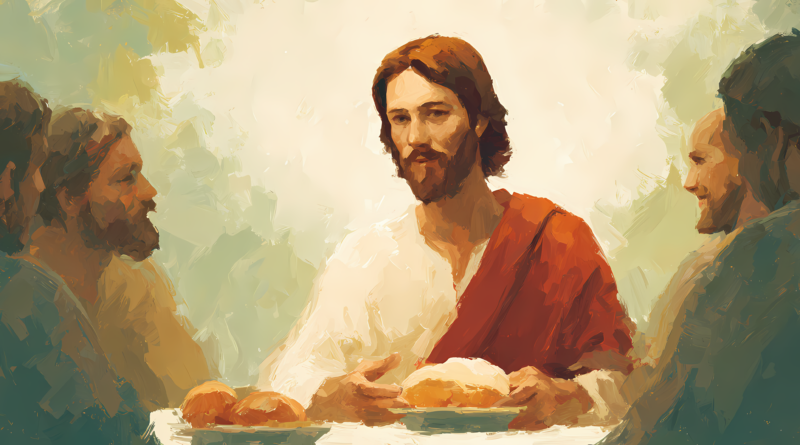
Divine Fellowship
Fellowship is a term often associated with the church and religion. Christians often say, “We had fellowship at church today.” However, the term also applies outside the church. Spectators at a sporting event experience fellowship as they cheer on their team, talk with one another in the stands, and enjoy the fabulous food from the concession stand. A family that never attends church finds fellowship around the dinner table or during a family outing. Fellowship can be found anyplace where people share common interests and enjoy each other’s company.
Whether small or large, and even across different cultures and backgrounds, Christians can fellowship because of the Holy Spirit who lives within us, our salvation, and God’s work in our hearts and lives.
Having fellowship with each other is easy, but what about fellowship with God? 1 Corinthians 1:9 tells us that God has called us “unto the fellowship of his Son Jesus Christ our Lord.” Christians can sit at a table, talk, listen to a sermon or music together, meet in the aisle at the grocery store, and have fellowship with one another. But we won’t meet Jesus physically until we are carried into His presence at death or the rapture, so how do we have fellowship with Him?
Looking at an event that happened while Jesus was physically here can clarify how we can have fellowship with Him while we are here and He is on the throne in heaven.
It is the afternoon of His resurrection. Two men are walking from Jerusalem to the village of Emmaus. The area buzzes with news of the empty tomb. The Romans are claiming that followers of Jesus stole the body while the guards slept. Women who went to the tomb that morning claim angels greeted them and told them He had risen from the dead. The Apostles are in hiding.
Most Jews at the time believed the Messiah would come, conquer Rome, and establish Israel as the dominant nation on earth. Multitudes of people believed Jesus to be that Messiah, but three days earlier He was placed in a tomb after being crucified. Now rumors of His resurrection are circulating everywhere. People did not know what to think.
These two men, walking along, were trying to make sense of the day’s news. Luke 24:15: “And it came to pass, that, while they communed together and reasoned, Jesus himself drew near, and went with them.”
These two men shared the most intimate kind of fellowship. Look at the wording: they “communed together”; to commune is to communicate intimately; they also “reasoned,” using their faculty of reason to reach conclusions. They shared their opinions, thinking out loud and putting facts together. Why haven’t the Romans punished the sleeping guards? How could someone roll that heavy stone away from the sepulcher door without waking them? Are the women telling us what they wanted to happen, or what really happened?
Jesus then shows up and starts walking along with them. Jesus asks them what they are talking about.
One of the men asks Jesus if He is a stranger. How could anyone not know what happened around Jerusalem that Passover weekend?
Jesus responds with two words: another question, “What things?” After Jesus asked, the men laid it all out on the table and told Him everything they knew.
Take a step back and think for a minute. Jesus knew exactly what happened; He lived through it. He is the main character in the events. When He first joined them, He knew what they were talking about, so why ask the questions? Why not just tell them why He was killed and explain the resurrection?
By asking twice what was going on, Jesus tried to open their hearts. Notice what Jesus says in response to their explanation of events. The first words out of His mouth were, “O fools, and slow of heart to believe all that the prophets have spoken: Ought not Christ to have suffered these things, and to enter into his glory?”
Jesus did not want an explanation of events; He already knew them all. He wanted these men to look at their own hearts. They did not believe ALL that the prophets had spoken. Remember, all these men had was the Old Testament. The Old Testament speaks of a future time when Christ sits on the throne in Jerusalem and rules the earth. That’s the Messiah the Jews were looking for. They had lived under oppression for so long; they wanted physical deliverance. Passages like Isaiah 53, with the words, “But he was wounded for our transgressions, he was bruised for our iniquities: the chastisement of our peace was upon him; and with his stripes we are healed,” were ignored and set aside. By putting faith (as they should) into passages about the Lion, they totally missed the passages about the Lamb.
Jesus didn’t engage them until they fully answered the question, “What things?” Jesus instructed them in Scripture. After His ridicule about not believing all the prophets had to say about Him, the Bible says, “And beginning at Moses and all the prophets, he expounded unto them in all the scriptures the things concerning himself” (Luke 24:27).
This is how fellowship with God works. To have meaningful, ultimate fellowship with God, we must pour our hearts out to Him. Tell Him everything: your fears, what angers you, and any questions you have about what you don’t understand; confess your sin; and tell Him things you wouldn’t tell anyone else, including your best friend. Tell Him your mood, whether you’re happy, sad, or frustrated, or whatever.
After those two men told Jesus everything, Jesus began to explain things from Scripture. That is how He talks to us. Open your Bible, study it, hide the Word in your heart, and let God use His Word to mold you into who He wants you to be. Pure fellowship with Him is a two-way communication street. We pour our hearts out to Him, and He pours His heart into us through His Word.

Preacher Tim Johnson is Pastor of Countryside Baptist Church in Parke County, Indiana. His weekly column “Preacher’s Point” may be found at: www.preacherspoint.wordpress.com