
Restitution attorney praises new law designed to help Holocaust-era victims and their descendants recover stolen property
A California attorney who specializes in cases involving the recovery of Nazi-looted art said bipartisan legislation recently signed into law by President Donald Trump may help resolve some of the restitution disputes over property stolen from Jewish families during the Holocaust.
“There is this choice between the good-faith purchaser and the original owner. U.S. jurisdiction favors the original owner. Other jurisdictions favor the good-faith purchaser,” E. Randol Schoenberg told Baltimore Post-Examiner.
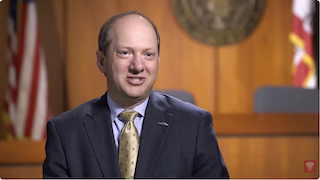
“So, what happens when a piece of property is stolen in one place and moved to another place where it is purchased and then brought to a third place? How do you decide those cases? It is not easy…I think that that is going to be a big benefit of this law.”
Trump signed the Holocaust Expropriated Art Recovery (HEAR) Act of 2025 into law on April 13, 2026. The law strengthens plaintiff protections codified in the 2016 version of the statute.
The 2025 law makes it easier to sue a foreign state in U.S. courts by removing a key hurdle put in place by the Foreign Sovereign Immunities Act (FSIA). FSIA became law in 1976 and creates guidelines for claims against a foreign state.
Plaintiffs previously had to demonstrate that their claims fell within one of the exceptions to FSIA-most notably that the property in question was stolen in violation of international law. The new law automatically assumes that this already was the case.
It eliminates the deadline for filing claims that was set to sunset on Jan. 1, 2027. However, the new law still requires claims to be filed within six years of plaintiffs having discovered the existence of stolen property.
The law applies retroactively, equally affecting cases that have already been filed and those that have yet to be filed.
It is estimated that more than 100,000 pieces of art stolen by the Nazis between 1933-45 have yet to be recovered.
Some of these works of art are housed in U.S. museums, but most are still in European hands.
Since the mid-1990s, both Congress and foreign states have passed laws and set up forums where survivors and their descendants can petition for restitution.
Schoenberg, 59, is the co-founding partner of the Los Angeles-based law firm Burris, Schoenberg & Walden, LLP. He is a 1991 graduate of University of Southern California (USC) law school.
Schoenberg is perhaps best known for being portrayed by famous Hollywood actor Ryan Reynolds in the 2015 film Woman in Gold.
The movie chronicles Schoenberg’s ultimately successful legal endeavor to get the Austrian Gallery Belvedere in Vienna to return five Klimt paintings to his client and family friend, Maria Altmann-most notably the world famous portrait of Altmann’s aunt, Adele Bloch-Bauer. Adele died in 1925 at age 43.
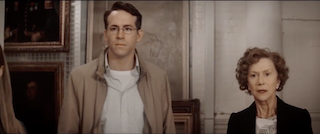
Maria was portrayed by internationally acclaimed British actress Helen Mirren.
The Nazis stole the paintings from the Bloch-Bauer family home in Vienna. After the war, the paintings were held by the Austrian government, where they remained for more than 50 years.
Maria and her husband, Fritz, left Austria in 1938 following the Nazi annexation of that country.
Maria and Fritz emigrated to the U.S. and settled in Los Angeles. Fritz died in 1994 at age 86. Maria died in 2011 at the age of 94.
Schoenberg spoke with the Post-Examiner on Tuesday about the Altmann case and what the new HEAR Act might mean for survivors and their descendants.
Below is an edited excerpt of the interview.
BPE: In the Altmann case, you argued that the FSIA applied to cases prior to its enactment. And in June 2004, the U.S. Supreme Court agreed with you in a 6-3 decision. The decision allowed for her suit against the Austrian government to proceed in U.S. courts. What was that experience like? Did you ever expect that the case would go that far?
Schoenberg: It was an amazing experience as a lawyer to be able to argue a case in the Supreme Court. That is very unusual and rare, especially for a civil lawyer.
In the larger context, it was very gratifying for me to be able to help my grandmother’s friend, Maria Altmann-in this very important case that also hit home. My family had the same background of being Austrian-Jewish refugees from Europe.
To be able to represent that community on this very large stage, both in the United States and worldwide-was so incredibly important and moving for me.
I remember going to Washington with Maria. Everybody was sure that we were going to lose. I was not very optimistic. But I said to Maria: ‘At the very least, you are getting interviewed by all these reporters.’
She was on the front page of USA Today and The New York Times. I said: ‘At the very least, there is going to be some opinion coming out of this even if we lose on this technical legal issue. And it is going to say what happened to your family. And it will be recorded for all time in U.S. law.’
Our goal was to tell the story and let people know what had happened with these paintings, the truth about what had happened to Maria’s family, and how the paintings actually got into the museum.
They were not donated there by her uncle who had owned them. They were taken there by the Nazis. So, that was the impetus for us.
The ultimate goal was getting the paintings back. And we were very lucky to be able to do that thanks to the Supreme court ruling.
BPE: Do you think that the SCOTUS decision contributed to the later unanimous decision by a panel of three Austrian arbitrators to return the paintings to Altmann?
Schoenberg: It contributed to the Austrian government deciding that they would finally talk to us about doing an arbitration. That was something that I had asked them to do in 1999. And it took them six years and a Supreme Court case to come around to the idea.
I had to make sure that Maria was ok with it. It was a very risky move. But I really felt that arbitration was the way to go.
I was taking a legal position that was not my invention. Maria’s father had wrote that after her [Maria’s] aunt had died, that the will was not binding on the husband-Maria’s father’s brother.
After the war, they had a lawyer that looked at it. And on the same day that he had made the decision to give up the Klimt paintings, he said: ‘Well the will probably does not give them the right to it. But I am going to do that so that we can get the other paintings out’- in this sort of extortionate procedure that they had had during the post-war period.
So, I was pretty confident that if someone followed the law that they would come to the same conclusion.
Maybe it was a little bit naive. But it worked out in the end.
BPE: Do you think that the movie accurately portrays the events that happened? What are your feelings about having been portrayed by Reynolds?
Schoenberg: It is a movie. It is Hollywood. So, everything is changed.
The best example of this, is that they happen to have me going to Vienna with Maria. But I actually never went there together with Maria. We went at different times and were never there at the same time. But in Hollywood, they moved it together.
They have me screaming at one point and swearing at Maria. That never happened. That was the most difficult thing for me to watch because of course I did not have that type of relationship with her. But pretty much everything is either true or representing something true that had happened, which I liked very much. I think they did a good job with it.
Ryan Reynolds was not my first choice. I was thinking more of some sort of schlepy Jewish character. But they choose Ryan Reynolds. And I think that was a good choice.
I always had to remind myself that if I were making the movie, no one would want to see it.
But by allowing them to translate this into their medium, and bring people like Helen Mirren and Ryan Reynolds, it became a super successful movie. And so many more people saw it.
BPE: You are also involved in genealogy work as well?
Schoenberg: I do a lot of genealogy work. I did a documentary film a couple of years ago called Fioretta, where I drag my 16-year-old son along on a roots trip to Europe. And trace back 500 years to the ghetto in Venice. It is available on Amazon and YouTube.
BPE: What advice would you give to the descendants of survivors throughout the world who may have knowledge of property that was stolen from their ancestors? How should they go about the claims process?
Schoenberg: It is very difficult. There have been various waves of restitution. So, most families have received something over the years. It is not unusual that they did not receive everything back. That is ordinary.
But it is very unusual that you can find something that you can recover at this stage. So, I would not advise people to go searching for things. Because it is not likely to be fruitful at this stage. On the other hand, if there are big valuable items that make it worth while to do a lot of work, you can look into what happened.
There are a lot of people in Vienna who do that and help people.
But it is very hard to find things.
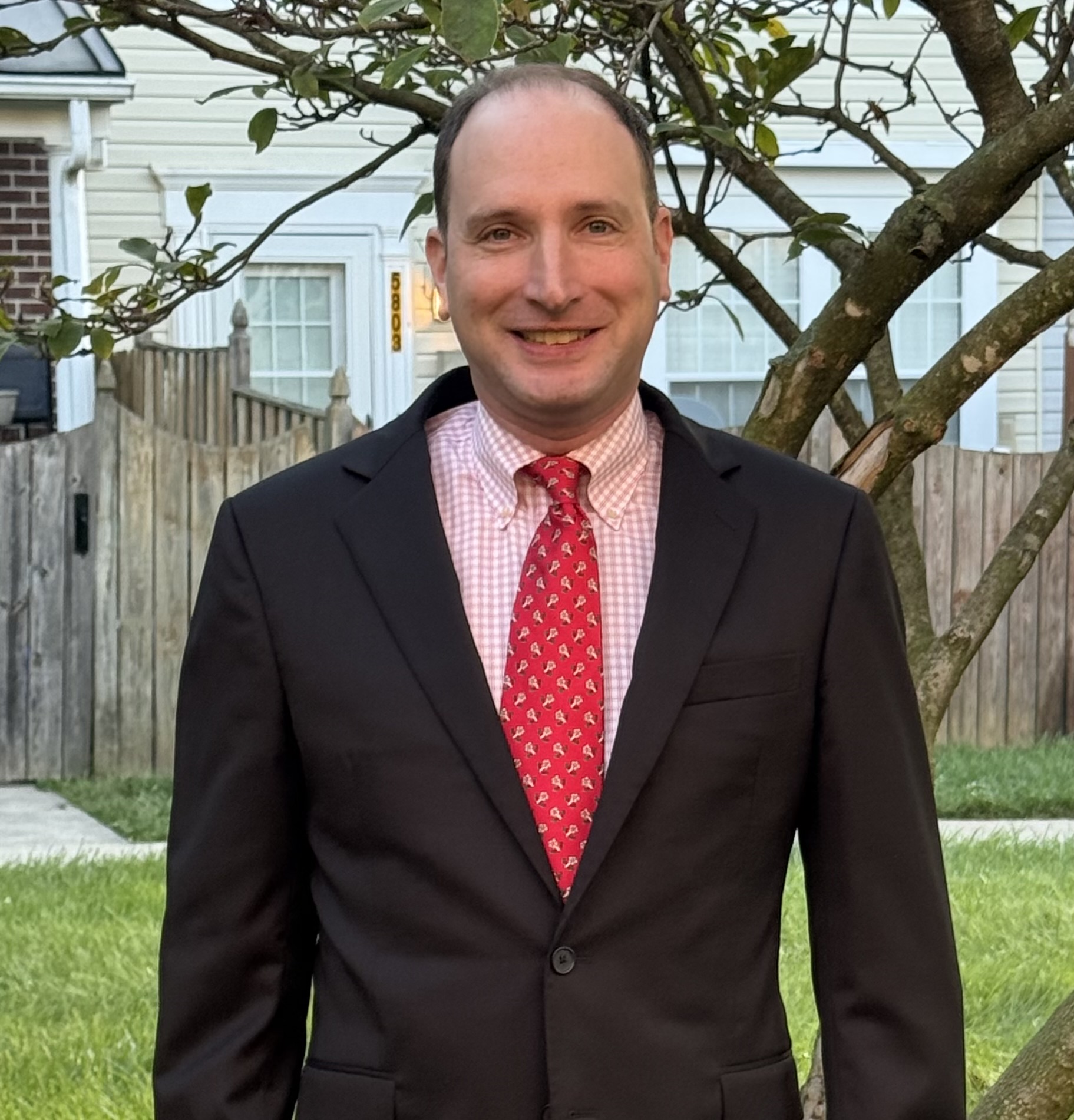
Bryan is the managing editor of Baltimore Post-Examiner.
He is an award-winning political journalist who has extensive experience covering Congress and Maryland state government. His work includes coverage of the first election of President Donald Trump, the confirmation hearings of Supreme Court Justice Brett Kavanaugh and attorneys general William Barr and Jeff Sessions, the Maryland General Assembly, Gov. Larry Hogan, and the COVID-19 pandemic.
Bryan has broken stories involving athletic and sexual assault scandals with the Baltimore Post-Examiner.
His original UMBC investigation gained international attention, was featured in People Magazine and he was interviewed by ABC’s “Good Morning America” and local radio stations. Bryan broke subsequent stories documenting UMBC’s omission of a sexual assault on their daily crime log and a federal investigation related to the university’s handling of an alleged sexual assault.
Congratulations, Bryan…fascinating piece…interview with Shoenberg very sophisticated… “It is estimated that more than 100,000 pieces of art stolen by the Nazis between 1933-45 have yet to be recovered.” — incredible, just incredible…Prof.