
Former Arkansas senator predicts Republicans will maintain control of the upper chamber
Former Arkansas Senator Tim Hutchinson said he believes the GOP will still occupy a majority of the seats in the upper chamber after November’s midterm elections.
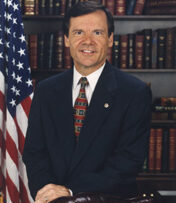
“It is not a given. It is certainly closer than it was six months ago. But the Democrats would have to have a real wave election to win the Senate,” Hutchinson, a Republican, who served in the upper chamber from 1997-03, told Baltimore Post-Examiner.
“It is possible. But they (Democrats) have to hit every base perfectly in order to take the Senate. I think it is more likely that Republicans will hold on very narrowly, or maybe even a 50-50 split, where the vice president will be the deciding vote.”
Hutchinson went on to say he believes there is a “good chance” that Democrats will retake the House Representatives.
Republicans currently hold the Senate 53-47 and the House 218-212.
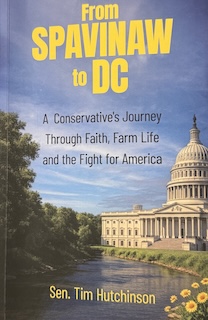
Hutchinson, 76, made the remarks in an exclusive interview on Monday in which he discussed his new book: From Spavinaw to DC: A Conservative’s Journey Through Faith, Farm Life and the Fight for America.
The 225-page memoir published by Atmosphere Press is now available for purchase on Amazon.com.
It relays Hutchinson’s personal and political journeys and how his devout Christian faith guided him along a path that began in rural Arkansas and carried him from the state legislature in Little Rock to service in Washington in both the House and the Senate.
Below is an edited excerpt of the interview:
BPE: Arkansas has always been a conservative state, particularly on social issues. However, for most of the 20th century it was predominantly Democratic. Since 2000, Republicans have carried the state in every presidential election. To what do you attribute this shift?
Hutchinson: I think Arkansas for a number of reasons lagged the south in the transformation from blue to red. Part of it is that we had had some very prominent and very distinguished Democratic leaders in the Democratic Party in Arkansas in those days: David Pryor, Dale Bumpers, and Bill Clinton. They were able to hold onto that Arkansas base longer than most of the other southern states.
When the change happened, the transformation occurred so much quicker than anybody could have imagined. Part of that was the presidency of Barack Obama. Many Arkansans felt that he was out of touch with them and too far to the left. It has been a remarkable change.
BPE: I believe you were the first Republican U.S. senator ever elected in Arkansas. And you were elected in a year in which President Bill Clinton was overwhelmingly re-elected. How did you manage to pull that off?
Hutchinson: I was the first senator ever popularly elected. During the Reconstruction era, they were appointing senators. The carpetbaggers were in control and they appointed a Republican to the Senate. He wound up getting run out of office. And I think he was hanged. At any rate, in 160 years, from 1836 to 1996-when I was elected-there was no Republican elected to the U.S. Senate. So, I think I was a pioneer in that regard.
It was remarkable. There had to be like 18% of Clinton voters who also voted for me. I think Arkansas has always looked so much not at party, as they do at the individuals who are running. An awful lot it was judging who they felt would be best for the office. We ran a really good campaign that year. It was very tough. Bill Clinton even did a rally for my opponent in Fayetteville. We did not run an overly partisan campaign. I did not highlight my Republicanism. I highlighted my love for Arkansas.
BPE: You were part of the effort in the early 1990s to pass welfare reform legislation working across the aisle with President Clinton and other Democrats. Given the polarized nature of Washington politics today, do you think it would still be possible for lawmakers to come to together to do something similar?
Hutchinson: All of the big legislative efforts that have ever occurred in our country have been bipartisan. And we are not going to be able to deal with the big challenges of today-whether it be the national debt or entitlement issues-if we do not have both parties buying in. We have got to work toward that. It will take people of goodwill who love this country. There are people in both parties who love this country. We have to find a way to unite and to find some common ground.
BPE: You speak at length about your Christian faith and as a Southern Baptist in particular. There is a passage where you reference a visit to Israel and how your faith has influenced your strong support for the Jewish state. What do you make of recent polls that show young people in both of the major political parties are less inclined to support Israel when compared with that of their elders?
Hutchinson: I think it is a little bit scarier than what you just described. When I posted the Mike Huckabee (U.S. Ambassador to Israel and former Arkansas governor) endorsement of my book, I was just shocked by the venom and the hatred that people posted in responding to the endorsement.
I think it has become evident through the war in Iran and through our support of Israel-that just beneath the surface there is a lot of anti-Semitism that still lives in this country. It scares me to see many young political leaders who view anybody who is pro-Israel or Zionist as being terrible. I worry about it. I thought that after World War II and the awfulness of the Holocaust that we were beyond that kind of hatred of the Jewish people. But I think it is still there. It demonstrates itself in different ways. It is not always the bombing of a synagogue. It can be in just the vile hateful things that are posted on social media.
I talk in the book about the impact that the trip to Israel had on me. The things that we have in common as nations. Not just the Judeo-Christian tradition, but democracy and freedom and the respect for human life. Those things are important. We have to do a better job of conveying those values to the new generation.
BPE: You discuss at length how the public perception surrounding the disintegration of your first marriage and subsequent marriage to a member of your Senate staff may have contributed to the loss of your 2002 campaign. Given the gravity of offenses politicians are often accused of today, do you feel that those sentiments now appear antiquated in comparison?
Hutchinson: I try in this book to be painfully candid about the fact that public service is very noble but can also be very costly. Maybe the standards and viewpoints on these things have changed. But it was a confluence of political events that occurred that I think made the divorce an even bigger issue.
The fact that my primary opponent made divorce an issue. It was not (Democrat) Mark Pryor who made that issue. It was in the primary that it became something that would hang on until the general election. I try to own up to my mistakes and talk about them honestly. I hope that younger Arkansans who read my memoir can see the value of public service. It is noble. But it is also costly.
Mark Pryor, who defeated me in that election, has become a dear friend. We share faith. We share many values. We have become good friends. I think that is the way politics is meant to be and should be.
BPE: Your younger brother, Asa, also has had a distinguished political career. He has served as a U.S. attorney, governor of Arkansas, and was a candidate for the GOP presidential nomination in 2024. You relay both a political and personal divergence from your brother vis-a-vis your strong support for President Trump and Asa’s alleged disapproval of your divorce and remarriage. How is that relationship today?
Hutchinson: That is a very painful chapter. It was very difficult to write. It hurt me. And it hurt my wife a great deal that we were excluded from all official events while Asa was governor. That has scarred our relationship. That scar remains today. I hope someday that there will be some reconciliation. But he has chosen to exclude me from his life. That has been very painful. It is something that I would have loved to have edited out of my memoir. But there are some chapters and some things that demand that they be included.
BPE: Talk to me briefly about the Cigar Caucus podcast that you host several times a week in which you have interviewed many former members of Congress?
Hutchinson: The podcast grew out of a couple of guys that I would smoke cigars with and discuss world events and American politics with. It still goes on today. We visit three times a week. Out of it grew this idea of a podcast. I have interviewed everybody from Tom Daschle to Newt Gingrich to John Boehner. Governors, senators, house members. I have visited with current members.
The whole point is to talk about the human side of politics. There is a human side of politics. And the best things happen when we see the opposition not as an enemy, but as a human being with the same challenges and problems that both sides have. We talk about civility in politics-not to abandon our strongly held convictions-but to find that there are areas where we can work together. And that when we cannot work together, we can disagree and still show each other mutual respect.
I think the podcast is contributing to the public discourse.
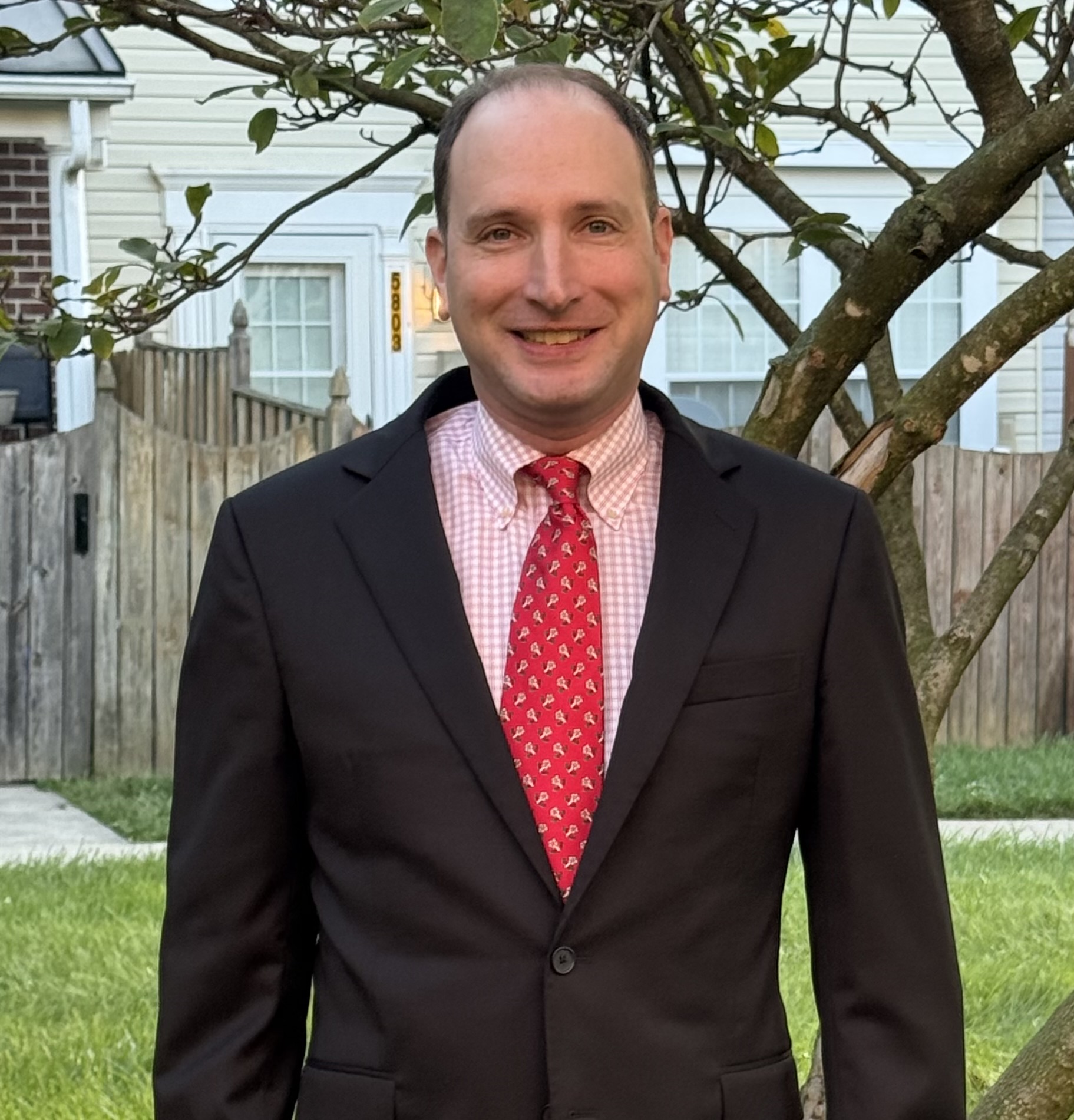
Bryan is the managing editor of Baltimore Post-Examiner.
He is an award-winning political journalist who has extensive experience covering Congress and Maryland state government. His work includes coverage of the first election of President Donald Trump, the confirmation hearings of Supreme Court Justice Brett Kavanaugh and attorneys general William Barr and Jeff Sessions, the Maryland General Assembly, Gov. Larry Hogan, and the COVID-19 pandemic.
Bryan has broken stories involving athletic and sexual assault scandals with the Baltimore Post-Examiner.
His original UMBC investigation gained international attention, was featured in People Magazine and he was interviewed by ABC’s “Good Morning America” and local radio stations. Bryan broke subsequent stories documenting UMBC’s omission of a sexual assault on their daily crime log and a federal investigation related to the university’s handling of an alleged sexual assault.