
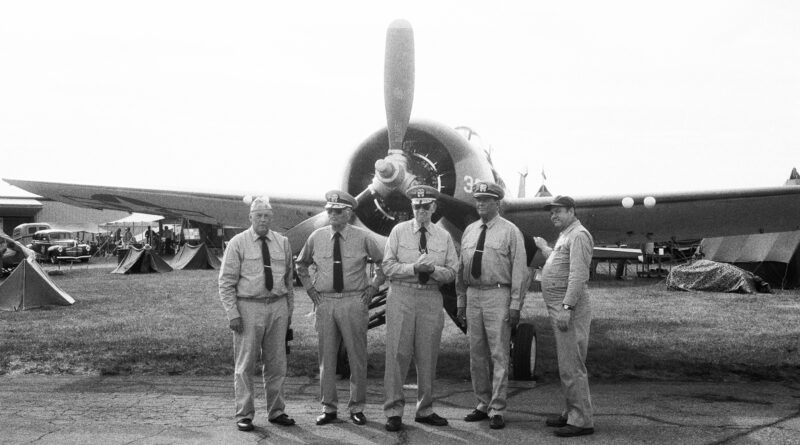
Reenacting WWII as seen through the lens of an Argus C3
READING, PA – It’s not unusual to see visitors in vintage apparel mixing seamlessly with the dedicated reenactors at the annual Mid-Atlantic Air Museum WWII Weekend. This is actually one of the nicest ground-level things about the family-oriented event. Everyone you meet heartily embraces the spirit of the era. What is unusual is to see a visitor eschew modern photography methods to capture the happening with a period correct film camera. Which is exactly why this year we stopped to talk with Lititz resident Tom Jordan.
“My father, who was a photo lithographer for 40 years, sparked my interest in photography when I was a teenager,” explained Tom. “I had changed to all digital photography, until one day when I was at the Camera Center of York and saw a young person purchasing film. I asked the owner about it, and he said that the younger generation is buying old film cameras and bringing film photography back. Hearing that, I went home, dug out my old Minolta SRT 101 and started using it again, along with other older film cameras that I have collected. Now I use both digital and film cameras.
“My father, father-in-law, and uncles were all WWII veterans, which started my interest in World War II history. I’ve only missed a few of the WWII Weekends over the years. I particularly like the reenactors and vehicles.”
The camera Tom held in his hands at MAAM was a vintage Argus C3. Affectionately known as “The Brick” because of its distinctive shape and hefty feel, the C3 was ubiquitous across the photography landscape during World War II. Millions of photographers from 1939 to 1966 were attracted to “The Brick” because of its unbeatable combination of affordability, advanced features, durability, and a unique, scientific aesthetic.
It was the layman’s camera that brought quality 35mm photography to the masses.
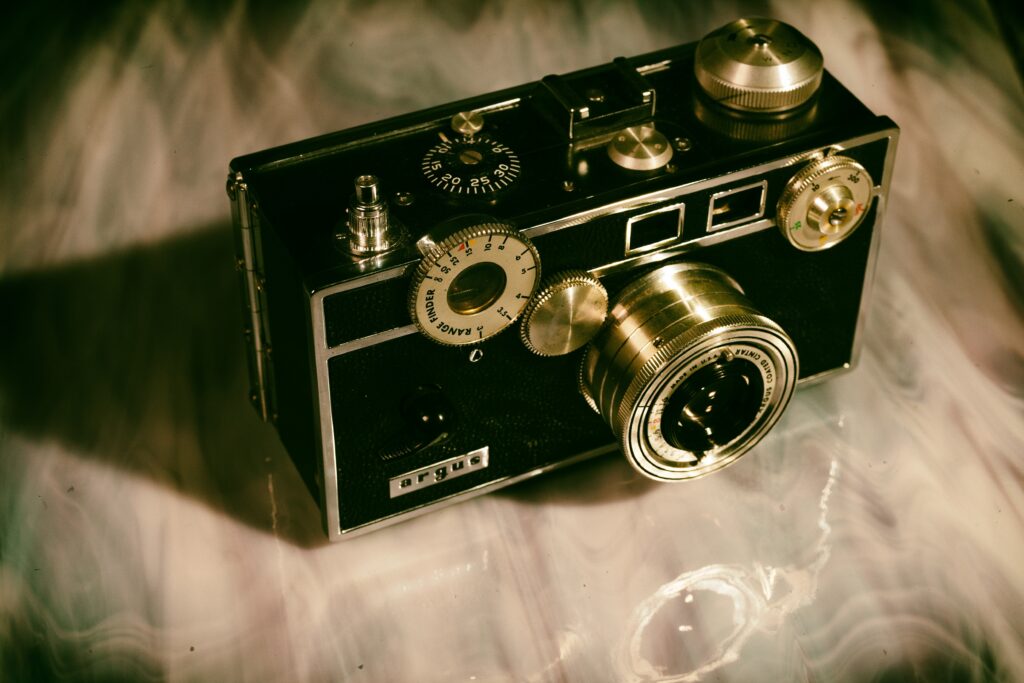
As a relatively inexpensive camera – hence its popularity with servicemen and civilians alike – many of the aging images found today in family albums were likely taken with a C3. And while not the first (or second) choice for familiar names like Robert Capa (Contax II / Leica), Lee Miller (Contax / Rolleiflex), W. Eugene Smith (Leica) and Margaret Bourke-White (who occasionally used large format aerial cameras!) – World War II soldier and photojournalist Tony Vaccaro used an Argus C3 to surreptitiously shoot his iconic wartime images.
“My particular camera was produced sometime in the early 1950’s,” continued Tom. “There is film in the camera now, so I can’t open it up to look at the serial number to give you an exact date. It was produced by Argus, Inc. in Ann Arbor, Michigan.
“I actually have 3 C3’s – two of them I use. The one I had in Reading was bought last year on Ebay. In fact, most of my old film cameras were bought on Ebay or at antique shops. I have two Graflex press cameras. One is a 3.25×4.25, which is display only, and a 4×5, which I use occasionally. I have a Minolta SRT 101, which I mentioned, and an Argus C4, which I also use. My Kodak bellows and box cameras are on display.”
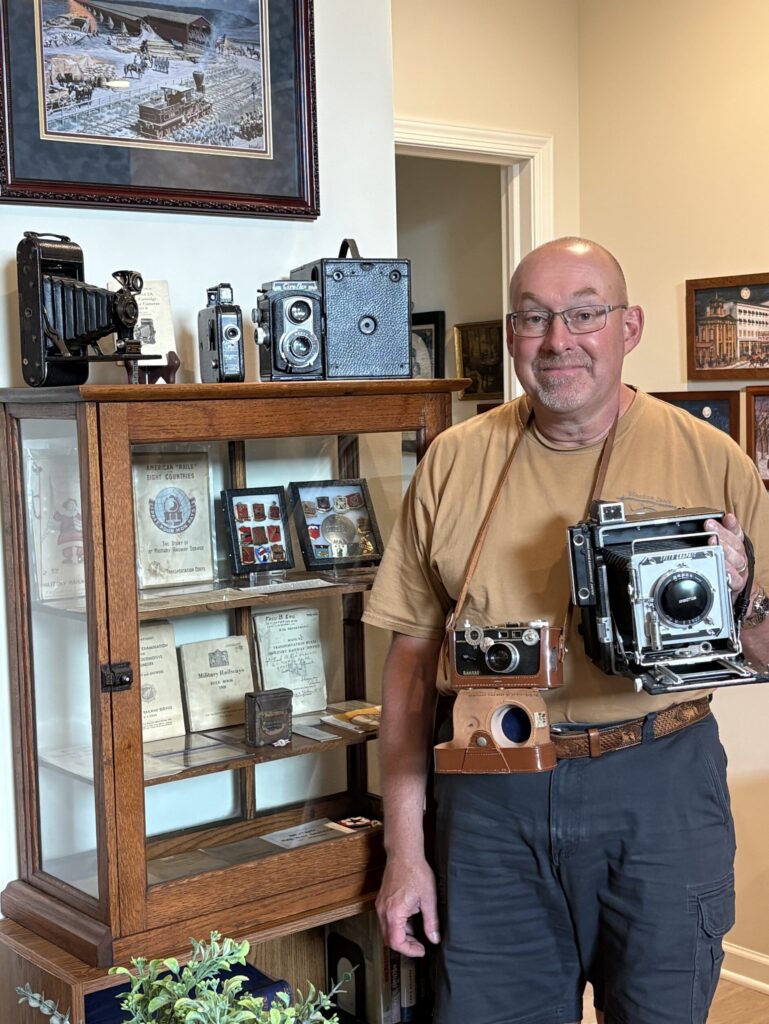
“In my twin reflex collection I have a Minolta Autocord and an Airesflex – both of them are usable. There is also a Graflex 22 which is currently being worked on at the Camera Center of York. I’ll use that one too, if they can fix the shutter.”
For the intrepid photographer, the 35mm film used in “The Brick” is still readily available; as is the 120 medium format used in some of twin lens cameras that Tom mentioned. One word of advice, however, for anyone looking to get into film photography, would be to ask a camera pro for recommendations on film type and speed for your vintage camera. (In Baltimore, the go-to shop is Service Photo.)
Shooting an outdoor event with a C3 on a bright sunny day in Reading?
“I used 200 speed film at the 200 speed setting, and the lens aperture set at f/11 or f/16,” explained Tom.
“I buy and have my film developed at the Perfect Image in Lancaster, Pa. or the Camera Center of York in York, Pa.. And I started to develop my own sheet film, which is a work in progress.”
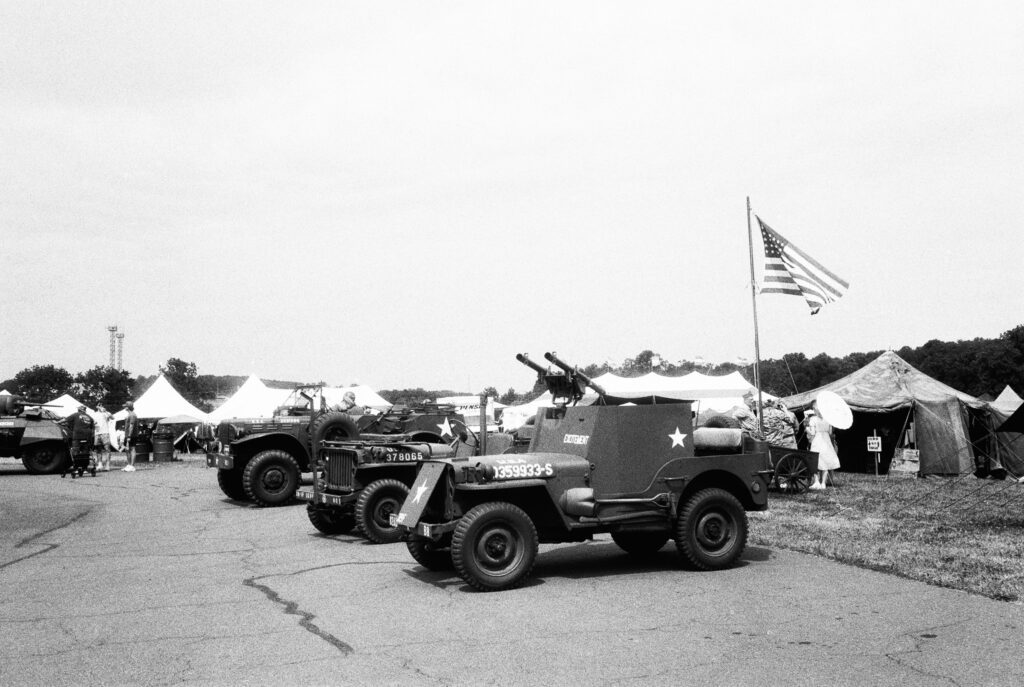
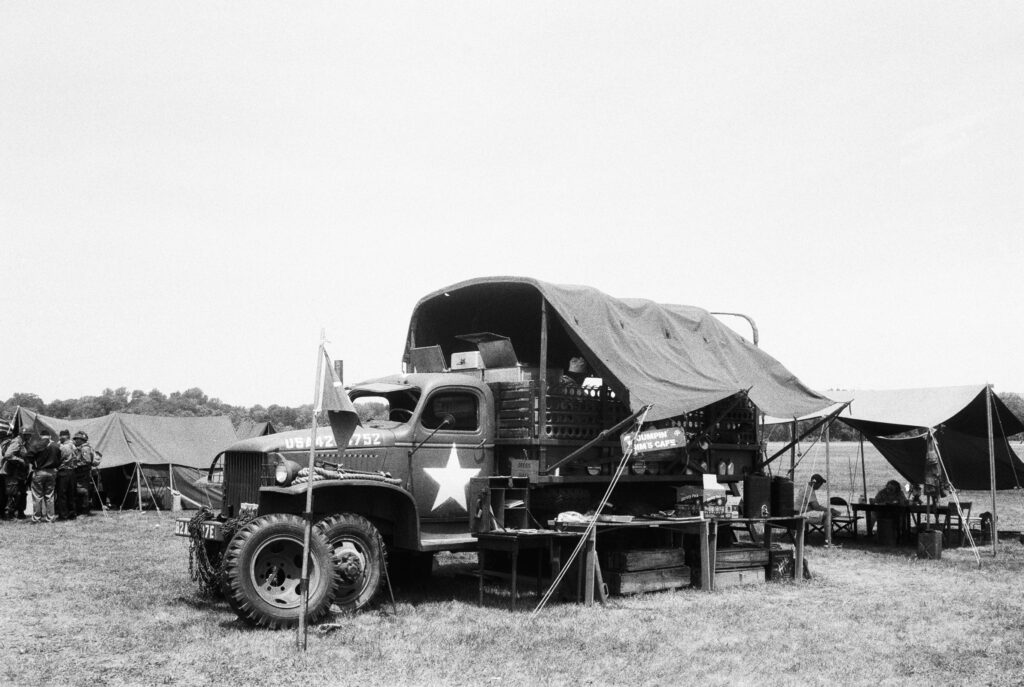
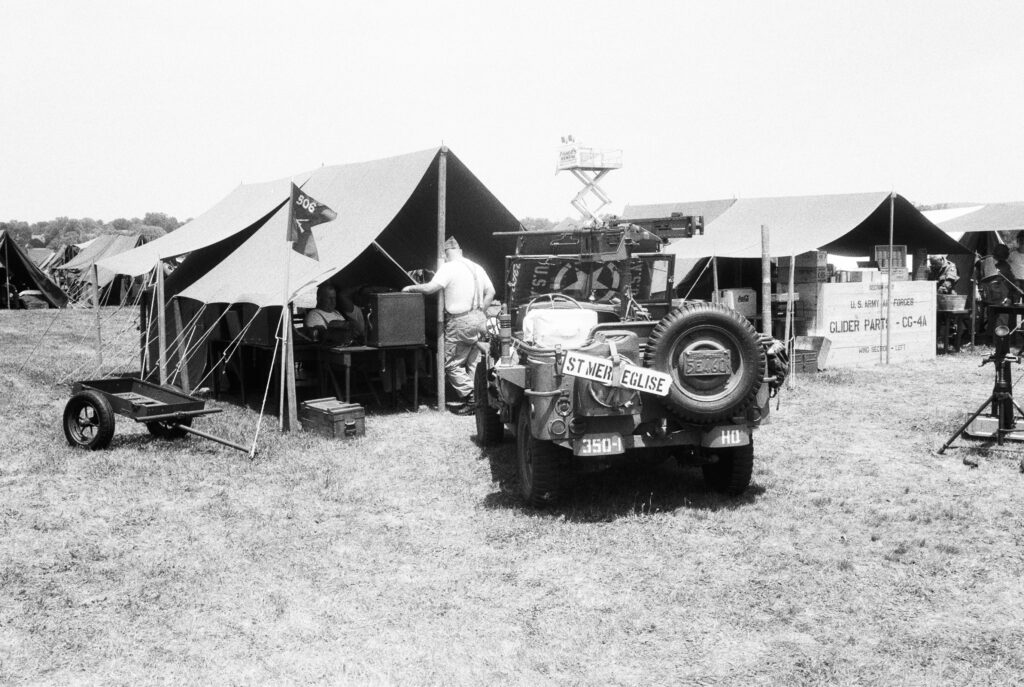
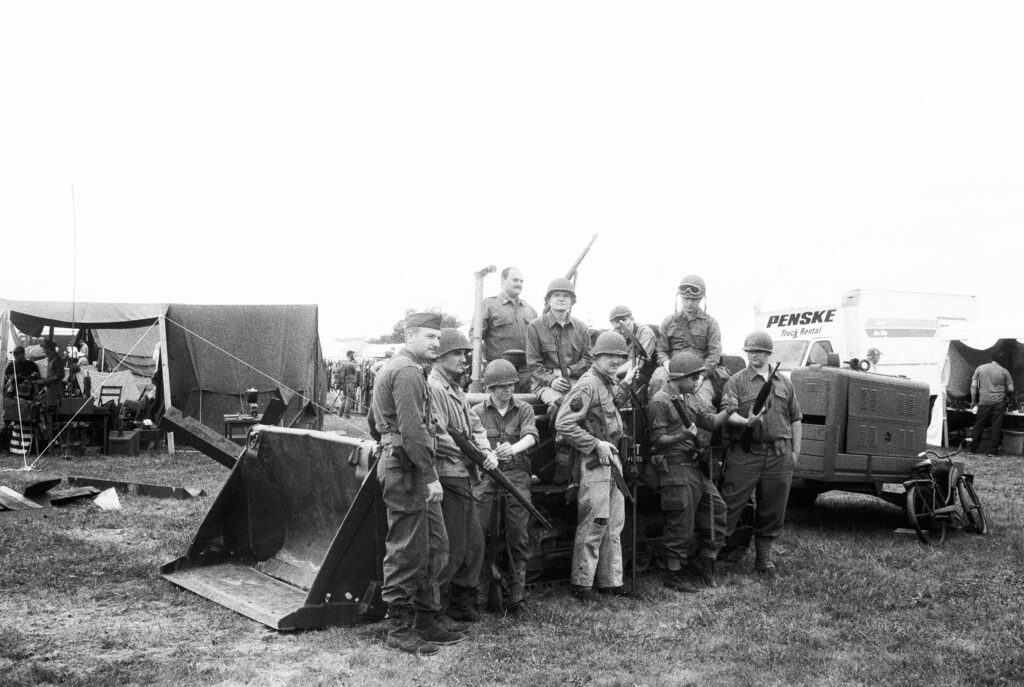
As for the final result? Tom was kind enough to send us a few of his favorites from this year’s trip to Reading. We’ll happily include them at the end of this article.
We didn’t ask Tom about his darkroom set-up, but it cannot be any worse than the makeshift field labs Tony Vaccaro used in Europe during World War II. Legend has it that Vacarro would develop his film, in the dark of night, by using four inverted combat helmets as chemical/rinse basins, then dry the negatives by hanging them on a tree.
Try doing that with the SD card on your digital camera.
© Copyright 2026 Baltimore Post-Examiner. All Rights Reserved
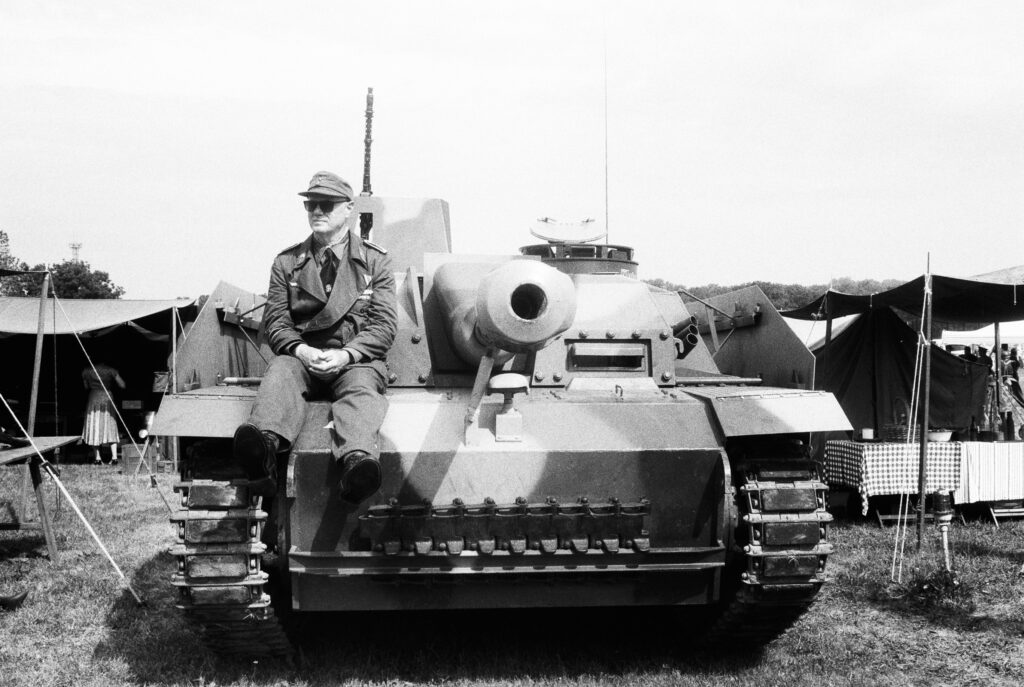
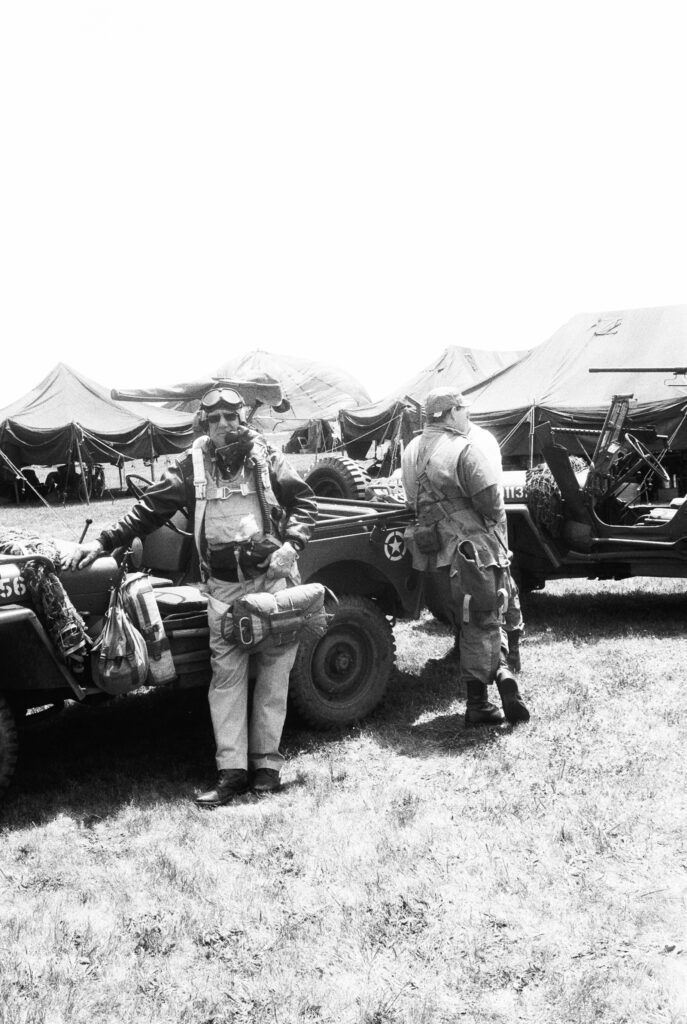
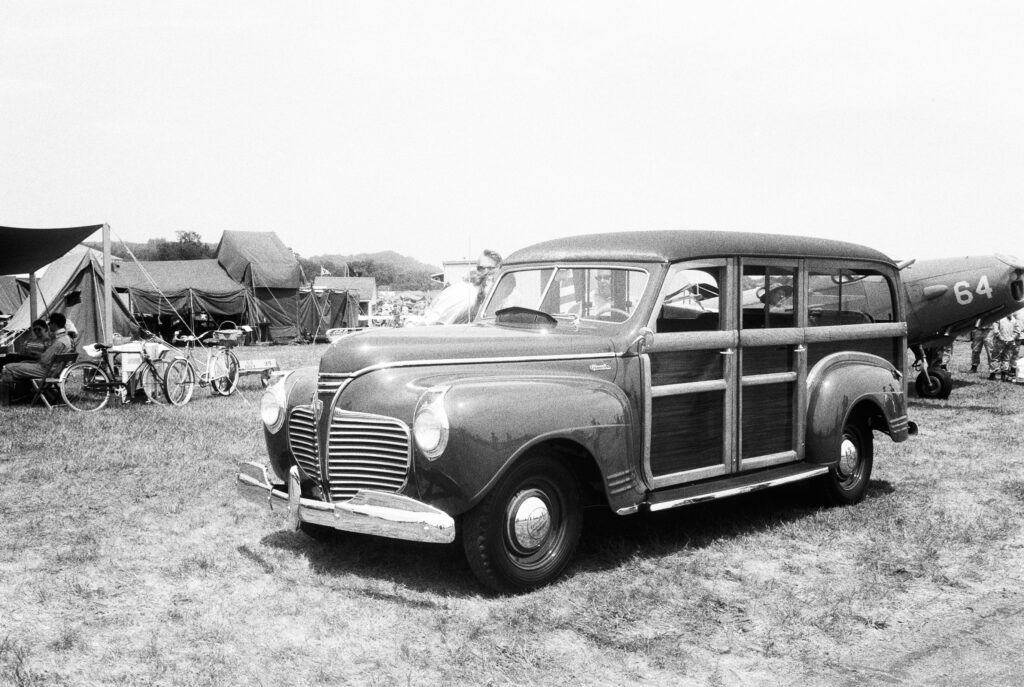
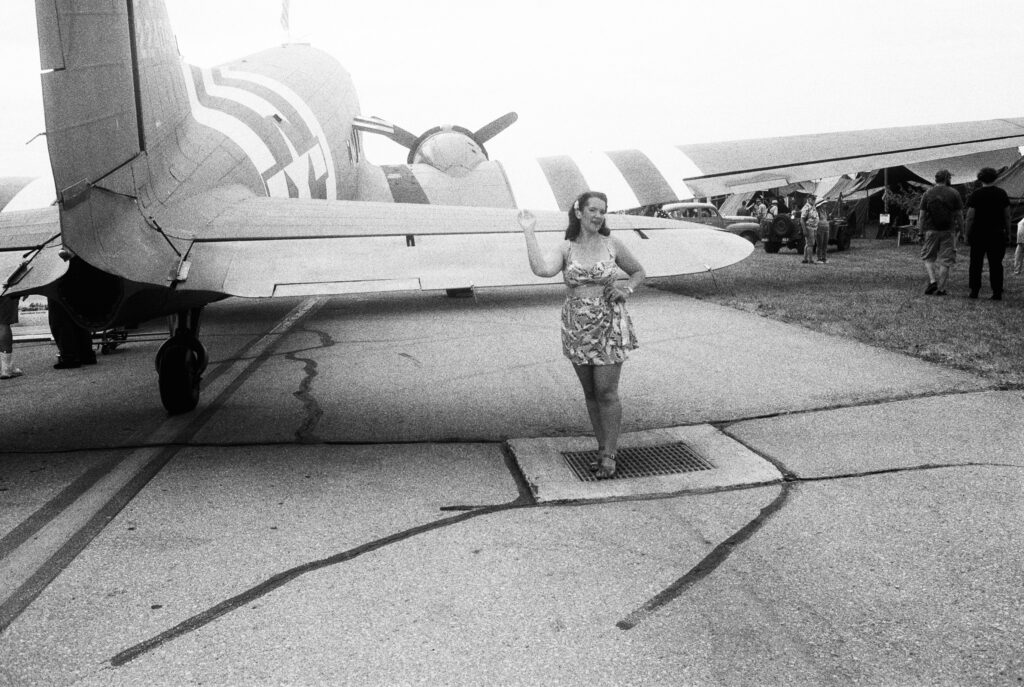
(Please enjoy the following photos taken by Tom Jordan at this year’s Mid-Atlantic Air Museum WWII Weekend)
Anthony C. Hayes is an actor, author, raconteur, rapscallion and bon vivant. A one-time newsboy for the Evening Sun and professional presence at the Washington Herald, Tony’s poetry, photography, humor, and prose have also been featured in Smile, Hon, You’re in Baltimore!, Destination Maryland, Magic Octopus Magazine, Los Angeles Post-Examiner, Voice of Baltimore, SmartCEO, Alvarez Fiction, and Tales of Blood and Roses. If you notice that his work has been purloined, please let him know. As the Good Book says, “Thou shalt not steal.”