Dark Shadows: Kathryn Leigh Scott Reflects on Spooky Soap’s 60th Anniversary
On June 27, 1966, ABC television took an enormous gamble on a relatively unknown writer and his macabre vision for after school entertainment. It was a novel idea – not unlike the novels of Stoker, Stevenson and Shelley; the sisters Brontë; Daphne du Maurier; Henry James; Hawthorne, Wilde, Dumas, Dickens and Poe. But, bewitching as the proposed series sounded, not even an artificial hand full of I Ching wands could have rightly divined the spellbound fans who would follow this singular drama.
In their defense, once bitten, what else were regular viewers to do?
The unknown writer was future Hollywood heavyweight Dan Curtis, and his saturnine saga was Dark Shadows.
Kathryn Leigh Scott (KLS to her friends) was fresh from drama school, when she landed a leading role on Dark Shadows. Now, sixty years later, the actress who brought the characters of Maggie Evans, Josette du Près and Rachel Drummond to life, is preparing for what may be the final reunion of most of the surviving cast members. We recently spoke with Ms. Scott (after a perplexing technical hiccup) to learn about her workaday life on the ground-breaking series, her publishing ventures, Dark Shadows fandom, and the whirlwind journey of an ingénue who grew to be so much more than the Bride of Barnabas Collins.
BPE: (finally connecting after six tries) Hello? Ms. Scott?
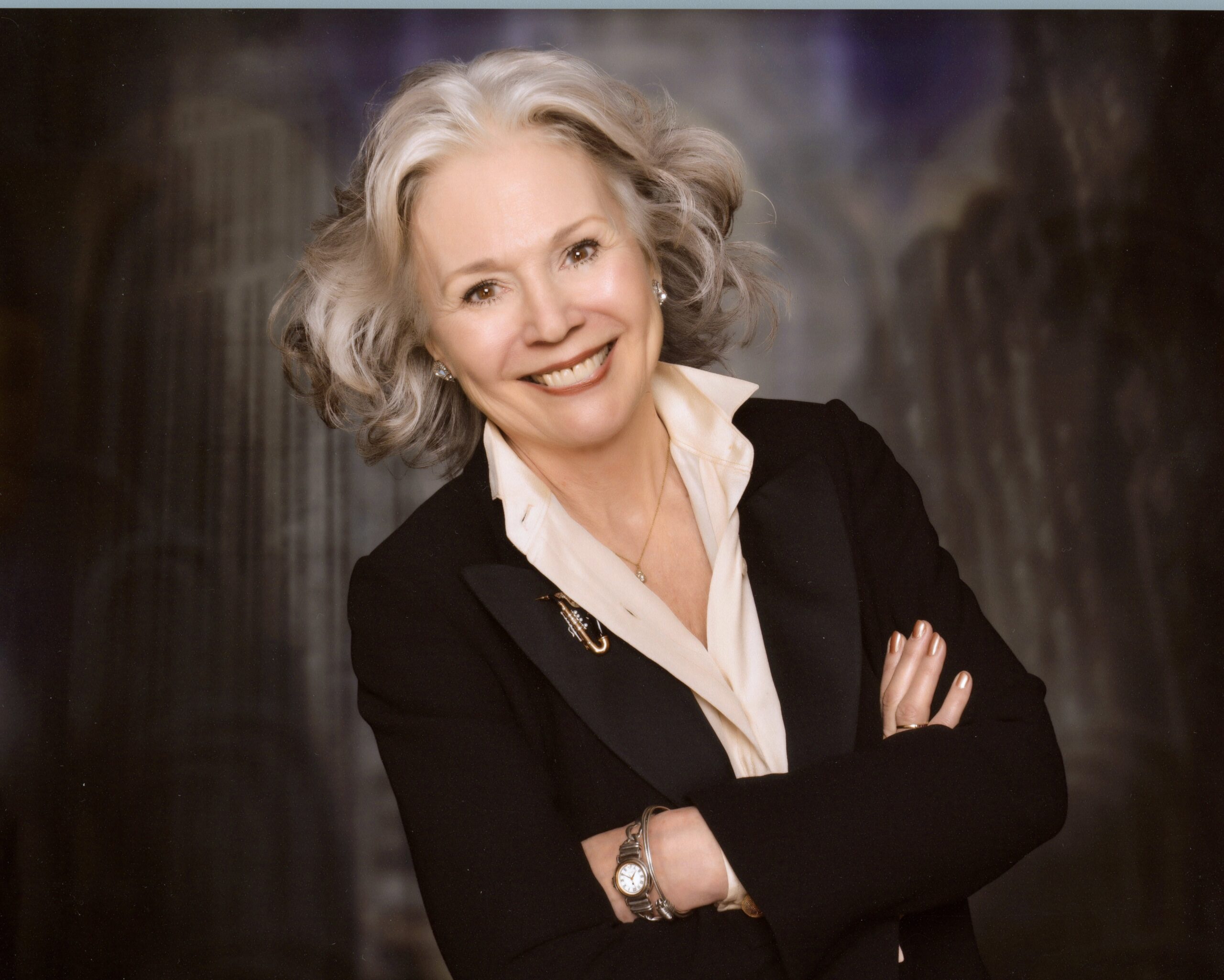
KLS: Oh, hello. Is this Anthony? Can you hear me? How are you?
BPE: I’m doing fine, except for some mysterious issue with my antique speaker phone. I’ve been playing musical buttons here for the last ten minutes. I should have never stopped using my candlestick phone.
KLS: Okay. Oh, are you video recording this, because I have no mascara on.
BPE: Don’t worry, neither do I, though I believe I still have a tube of Mandarin Yellow in my makeup case from a long-ago production of Roshomon.
KLS: (laughing) Well, none of my makeup is vintage, but when I was a student at the American Academy of Dramatic Arts, we carried around what amounted to a metal fishing tackle box. You could make yourself to look like anything from a geisha to a tree. That’s how they trained you back then. Everything was grease paint!
BPE: I’m glad we’re on the same theatrical page! And yes, I am recording our conversation, but just the audio. If you don’t mind, I’d like to begin by citing a portion of the press release for your new book, Dark Shadows Legacy. I’m guessing this was written by either you or your co-author, John Logan.
It reads:
Dark Shadows ran for 1,225 episodes over four glorious years but has never been “off the air”… Perhaps the show’s greatest legacy is in service to all the youngsters for whom a scary, spooky afternoon TV show became a safe haven, with a half-hour escape from the fears and anxiety that are part of growing up. All kids want to feel that they belong, that they fit in and that they are accepted for who they are. Dark Shadows, with its cast of eccentrics, loners, rebels and other-worldly characters, provided a safe space to explore those yearnings to belong.
I wanted to start there, because as one of those starry-eyed kids who rushed home from school every day to watch Dark Shadows, that imaginary safe haven you speak of really resounded with me.
KLS: You know, that to me is the reason why Dark Shadows was such a success, because it was school kids and housewives or Grandma – whoever was around at 4:00 in the afternoon – who were tuning in. It was break time, and it was safe sitting next to Grandma on the couch, or sitting there with other latch key kids, and having that kind of acceptance and a place to escape.
BPE: With such an odd audience mix for Dark Shadows, I have to ask if the networks crunched the viewership numbers in the 1960s the way they do it today? With micro demographics?
KLS: No, though I think they had the beginnings of it, because they had the Nielsen ratings, right? So they had an idea, just by the time of day, of who, what and where people were watching. But with only two or three channels, and everything being appointment TV (no DVR or recording devices), I think they had the beginnings of micro demographics, just not to the extent they have it now.
BPE: That certainly makes sense, though not always in a positive way. I remember the outcry against CBS’ back-to-back cancellations of Jackie Gleason’s and Red Skelton’s variety shows. Both were still pretty popular programs, but the story was that demographics were not running in their favor; that it was an older, rural audience which was watching those shows.
KLS: Yeah, the same thing with Lawrence Welk. On the other hand, that was when they were advertising Geritol and products that were more suited to an older generation. But yeah, I think demographics was the demise of several of those variety shows. Even Dinah Shore got canceled, and she was sponsored by Chevrolet!
But getting back to Dark Shadows… oh, where are you located?
BPE: I’m in Baltimore, so that’s scary enough, right there.
KLS: No, I asked because I wanted to mention that they are having an evening of Dark Shadows at UCLA on the 27th of June. David Selby and I are participating in a discussion with Jim Pierson. Jim is the Dark Shadows historian. We prerecorded me talking about the very first episode, which is going to be shown complete with commercials, because when we did the show, the commercials were rolled in real time. That’s when we were able to run from one set to another, or do costume changes, or whatever, and for the cameras to be re-positioned.
Those commercials which ran during our show tend to be for housewife things, either soaps – literally – Hazel Bishop cosmetics, or refrigerators. Betty Furness was always in one of those appliance commercials, right? Or Betty White with Fantastik. Or Madge the manicurist with the dish detergent that was so mild you could soak your fingers in it. Oh, and that other woman, Mrs. Olsen, who sold Folgers Coffee. Those were the housewife commercials.
BPE: Which gets back to demographics. It’s kind of frightening, though, after all these years, to think of how many of those commercials I remember. “You’re soaking in it!” But just so you know, this interview also will run in our sister publication out in Los Angeles, so feel free to talk about L.A. as much as you’d like.
KLS: That’s great! The event at UCLA is on the 27th, however, our big event will be the weekend of July 31st to August 2nd. That’s when we’re having what we are calling The 60th Anniversary and Last Dark Shadows Festival. That’ll be at the LAX West End.
It begins at noon on Friday, July 31, and there’s a big lunch on Saturday. There will be at least a dozen actors from the two main iterations: the original Dark Shadows from 1966 to 1970 with David Selby, Jim Storm, Jerry Lacy, Roger Davis, Nancy Barrett, Marie Wallace, Lisa Richards, Terryane Crawford, Sharon Lentz, and me, and then the primetime series that was done on NBC in the 1991 with Joanna Going, Roy Thinnes, James Fyfe and Barbara Steele.
So, that’s quite a lot. Keep in mind our ages range from 70 to 91.
BPE: I guess the kids from the show – Sharon (Smyth) Lentz and David Henesy – are both nearing 70 now. Did you mention that David Henesy was going to be there for the L.A. event?
KLS: He’s been invited. I don’t know that he’s responded yet, but Sharon Lentz has. They would have been the youngest members of the cast, then I believe I’m the youngest of the next batch.
So that will give you some idea of why this is being billed as the last Dark Shadows festival. Time marches on for all of us.
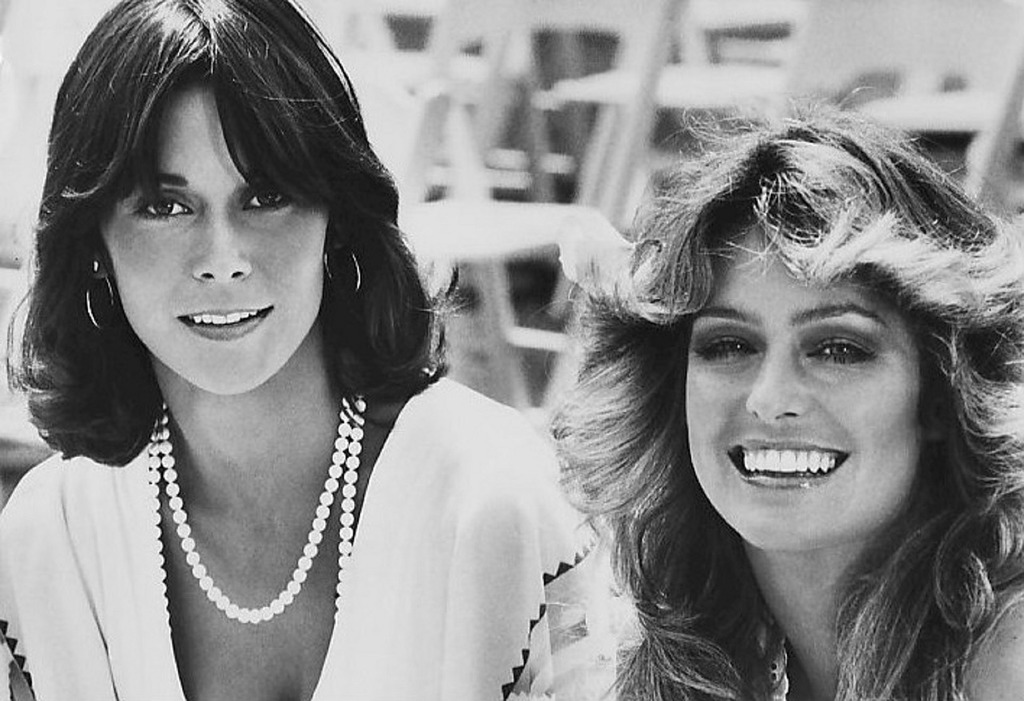
This was our first job – Lara Parker, David Selby, Nancy Barrett, Jim Storm, Chris Pennock, Lisa Richards, Kate Jackson, Alexandra Moltke and me. Alexandra Moltke, Kate Jackson and I all graduated from the American Academy of Dramatic Arts and went straight from graduation at the AADA to Dark Shadows.
BPE: How did that come about? I mean going directly from drama school to a nascent soap opera?
KLS: We auditioned! Alexandra and I auditioned over a period of five months, culminating in a screen test, and then we literally started working the next day. Kate Jackson joined us a year later, and she too auditioned. So did David Selby. Except for Joan Bennett, everybody who came on the show auditioned, including Jonathan Frid.
BPE: Was the show shot in New York or Los Angeles?
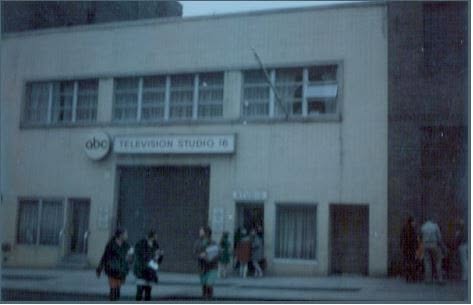
KLS: It was shot in New York. We had our own studio (ABC Studio 16), and I make the point of saying that, because we had our own space on West 53rd Street in Hell’s Kitchen, around Ninth Avenue. We were stuck between a Pentecostal church and a school. You know, it was kind of a rough neighborhood. And because we had our own studio and we weren’t at the big ABC studio with all of the other soap operas, I think that helped to forge the bonds that we had as actors.
The other thing is the fact that even if you were killed off, you came back as a ghost or another character. I played four characters and was the first to play a second character with Josette du Près. Joan Bennett, Louis Edmonds; pretty much everybody eventually played another character.
So we were innovative, and I think that we came along at a really good time.
Some of those other soap operas had been on since, well, they’d been on the radio in the 1930s and at the dawn of television. They were pretty pedestrian affairs. I mean, people sat there at coffee tables talking about infidelity and really mundane subjects. Compare that to what we were dealing with on Dark Shadows, with ghosts and vampires and paranormal happenings. We were an odd mix of romance, thriller, science fiction, and the paranormal.
BPE: Kind of a mash up between Jane Austen and Mary Shelley?
KLS: Yes, and there’s a reason for that, because the other distinctive thing about Dark Shadows is that we took our cues from classic literature. The Picture of Dorian Gray, Jane Eyre, Wuthering Heights, The Scarlet Letter. These were the plot lines for Dark Shadows. When David Selby came on playing Quentin, and I was playing the governess Rachel Drummond, it was a direct lift from The Turn of the Screw.
BPE: You mentioned some of the younger actors from the show who will be there at the event, but sadly many of the older cast members have passed away. I was thinking of that a few weeks ago, when I screened the 1959 movie Journey to the Center of the Earth. I remembered there being a menacing villain in that film, but was surprised and pleased to see that the antagonist was none other than Thayer David. So, along with the youngsters who were just getting started, Dark Shadows had several seasoned character actors, such as Thayer David, John Karlen, and Grayson Hall.
KLS: Yeah, we were terribly lucky as young actors straight out of drama school. On the one hand, we were using everything that we had learned doing Chekhov and Restoration Comedy and Shakespeare because our plotlines had us time traveling in different centuries. We also had the gift of working with veteran actors like Thayer David, Humbert Astredo, Joan Bennett, Louis Edmonds, Clarice Blackburn and Grayson Hall. They were all stage actors. Joan Bennett even did quite a lot of stage work, aside from her movie career. So the fact that we newbies had done nothing but theater in high school and in drama school, we were just terribly lucky to all be starting together on the soap and learning from these veteran actors. And learning how to feel comfortable in this totally new electronic environment.
BPE: Was Jonathan Frid comfortable in the role of Barnabas Collins? I recall reading that he had some self doubt, both with the weekday grind of television and with portraying the vampire persona.
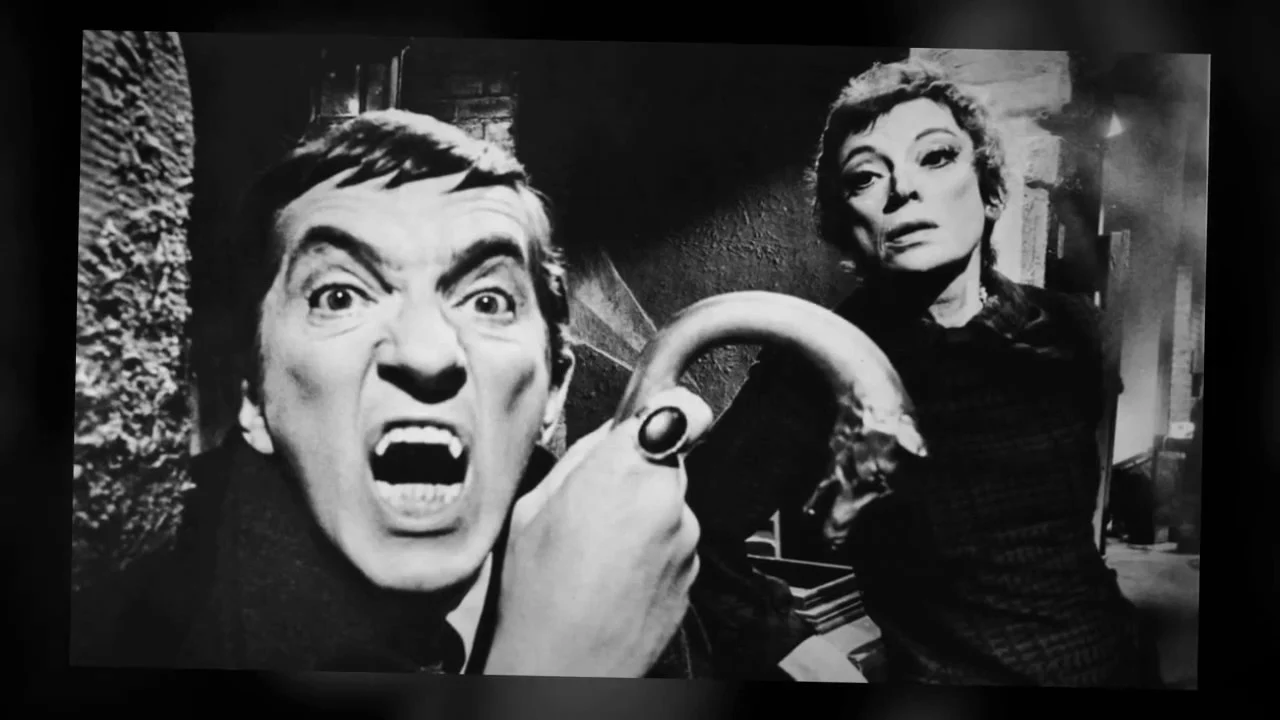
KLS: Well, interestingly, I was there that very first day when Jonathan came into the rehearsal room, dressed as Barnabas Collins. It was the first time that we had met Jonathan, and he walked in fully formed in character, with the Edwardian suit, the little leather boots, the cane, the ring, that spiky hairdo. Everything was already there, including his demeanor as Barnabas. But he was largely a stage-trained actor. He graduated from the Royal Academy of Dramatic Arts in London and had done a lot of repertory. But as Barnabas, he really did the heavy lifting on the show. He was in almost every day and he had the most dialog. Jonathan wasn’t used to that. He was used to long rehearsal periods and working things out in rehearsal.
We learned very quickly that you came in with your lines learned. You got your blocking down, and you rehearsed the scenes. As Joan Bennett would say, you didn’t rehearse to get it right, you rehearsed not to get it wrong. We had only a scant four hours for rehearsal, and then, of course, makeup and a run-through before we went live.
Now, for the veteran actors, it was a little more difficult. Joan Bennett would spend the weekends learning all of her dialog for the coming week. The same held true for Louis Edmonds and Jonathan. But even then, Jonathan really could not have done the show without the teleprompter. It was just too many lines to learn.
BPE: And yet, when you watch the show now, there are glitches here and there, but everyone seems to have tried their best to make the action flow naturally.
KLS: Yeah, I think that we did. I never used a teleprompter, only because I discovered on the very first shows that if your eyes happen to land on the teleprompter, you could almost not pull them away. It’s addictive, and you can get into trouble that way, so I don’t think the younger actors used the teleprompter. I mean, we really avoided it, but I don’t think Joan Bennett, Grayson Hall and Jonathan Frid could have managed without it.
BPE: Dark Shadows ran for nearly five years, then it ended somewhat abruptly – the current storyline be damned. Was it ABC’s decision’s to pull the plug, or was that decision made by Dan Curtis?
KLS: It was ABC, because it became an expensive show to do. You know, the other soap operas had minimal sets. I mean, they were mostly contemporary domestic dramas or a hospital show. But for us, doing the kind of time traveling that we were doing with the elaborate costumes and sets? It just became an expensive show to produce, and we were replaced by a game show.
Brandon Stoddard, who was running daytime programming then at ABC, actually had to leave the ABC building by a back entrance because there were fans out front demonstrating to bring the show back.
BPE: What’s amazing to me is that ABC would determine it was too expensive to continue a show with such a loyal following. Surely the appliance advertisers weren’t losing any money?
KLS: It did become quite expensive. Those later episodes started getting more complicated because of our plot lines. I think we ended the show when we were back in the 1790s, doing parallel time, of all things, in two time periods. Dan Curtis was probably relieved because he wanted to get on with other projects. He wanted to move to Hollywood; he wanted to do other kinds of shows.
Dark Shadows was not only his first drama, it was the first big thing that he had done in television. Before that, he was a salesman, selling syndicated TV shows, and he produced a golf show on NBC. Dan came to ABC with a story, and they bought it. I think he was surprised, and he jumped in at the deep end. He directed a few episodes of Dark Shadows before he did House of Dark Shadows – the first MGM feature based on Dark Shadows. Having directed only a handful of episodes of Dark Shadows, once he got a taste of directing a film, that’s what he wanted to do.
BPE: Dan simply wanted to move on?
KLS: Yes – as did David Selby, Lara Parker, Kate Jackson, Jim Storm, Chris Pennock, Lisa Richards. Everybody moved to Hollywood. I moved to London and did a lot of stage and film work in Europe. But I was also ready to move on.
BPE: Was the European move something that you did purposely, or was it on more of a whim?
KLS: My boyfriend at the time (Ben Martin) was a Time-Life photographer. He had been stationed in Paris, so initially I moved to Paris to be with him. I did a couple of films in Paris, then within the year, we moved to London and were married. I got an agent in London, and I started working almost immediately.
I did quite a lot of work there, and that’s really what I wanted to do. I worked in Paris, London, and around England for about 10 years and it was ideal for me. The Greek Tycoon, with Anthony Quinn and Jacqueline Bisset, started shooting in London, then finished up in New York. Out of that, I got a pilot, went to Hollywood, did the pilot and then did the series. But I kept going back and forth – working in both Hollywood and in England.
BPE: So, filming The Great Gatsby in America falls somewhere in those travels?
KLS: Yes, I did The Great Gatsby in 1974.
BPE: Weren’t you also in The Last Days of Patton with George C. Scott?
KLS: Yes, and I was in Murrow, where I played Edward R. Murrow’s wife Janet.
Back in Europe, I did Harvey with Jimmy Stewart in the West End. And I did a season of repertory at the Bristol Old Vic. I did Providence with Alain Resnais in Paris. That starred John Gielgud, Dirk Bogarde and David Warner. And I did L’Alphoméga – a French film where I played twins. There was mini series work for BBC and ITV, but I went back and forth across the Atlantic. That was fortunate, because if you’re gone too long, you’re forgotten. I was very lucky, because stateside, I got a series with Brian Dennehy. And, I don’t know, I was in maybe four or five other TV series, including an arc, or a storyline, on Dallas.
BPE: Wasn’t that Dallas arc shot in Europe?
KLS: Yeah, the episodes of Dallas that I did were all shot in Europe. I also did several episodes in a storyline in Dynasty. I think I probably did more varied work moving to Europe than I would have had I gone to Hollywood.
BPE: With all of this acting, you somehow managed to find time to launch a publishing company?
KLS: I did! I think I was 40, which is around the time that actors start looking for something else to do.
BPE: Please tell us how you became a publisher.
KLS: It happened accidentally. I was working in England, and on a trip back to the United States, as I was going through customs, the customs officer recognized me as Maggie Evans. This was some years after Dark Shadows ended, so I said, “How did you do that?” And he said, “Well, I watch your show in reruns, and I saw David Selby a week ago at a fan festival.” Hearing that, I got in touch with Lara Parker, and she said, “Yeah, they have these Dark Shadows festivals, and the show is in reruns, and you know we are coming up on our 20th anniversary.”
Next, I got in touch with Dan Curtis and said, “You know, I’m going to do a book about Dark Shadows,” and it happened to coincide with the passing of Grayson Hall, and Joel Crothers, who played my boyfriend on the show.
I’d actually been assigned a magazine article about Joel, and the words just flowed on the page, so I turned in my article and kept on writing. That was the genesis of My Scrapbook Memories of Dark Shadows.
When it came out in 1985, I realized that I knew how to reach the audience. But I also wanted the book available for the 20th anniversary of Dark Shadows. I knew that if I went with one of the legacy publishers, it would take a year and a half to get it into the stores. I could do it in nine months if I published it myself, so I printed 60,000 soft cover and 7,500 in hardcover.
When I got to the festival, I discovered that people were buying one of each.
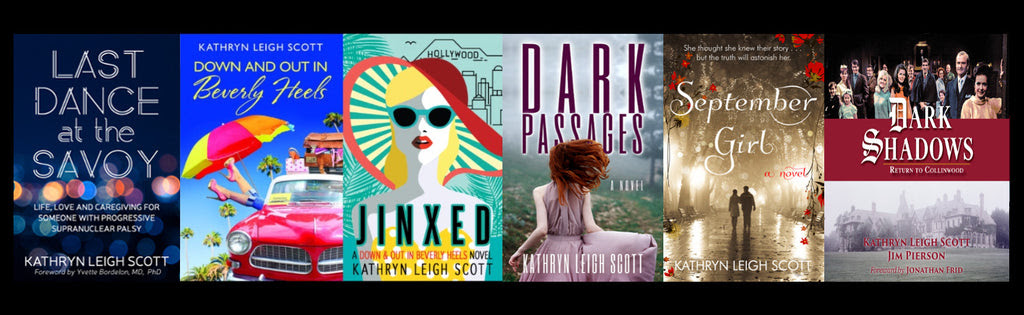
The Dark Shadows fans would tuck away the hardcover, with all of the autographs of the actors, and used the soft cover to actually read the text. That’s when I realized how much I loved publishing, and now I’ve published around 100 books – all of them entertainment related – through my company Pomegranate Press. Coffee table books, ‘How To’ books – like a book on how to do voice overs – books on TV series like Kolchak, Maverick – Oh my goodness, my mind is blanking here.
BPE: I’m glad you mentioned Kolchak. Wasn’t that also a Dan Curtis production?
KLS: It was. But just the TV movies? Oh my god, this is ridiculous. Now I have to look up my books! Oh, I got Bob Hope to write a forward to one book. Ginger Rogers wrote a forward to a book. Joan Bennett wrote a forward. That’s funny. I’m just blanking on the titles all of a sudden. I did a lot of books on Dark Shadows, but I also did Following the Comedy Trail, Hollywood Goes on Location, The Fugitive. Anyway, a lot of books on television.
BPE: Did you watch much television growing up?
KLS: I did not. I’ve never been a television watcher, and I don’t watch it now. I mean, my husband watches baseball and all sorts of series on television, while I’m sitting, reading a book. Did you?
BPE: I’ve always been an avid reader, but I did watch a lot of television when I was growing up. Not so much today, aside from old movies and what I find of interest on YouTube. Still, I like to tell people that I stopped watching TV when they canceled F-Troop.
KLS: Ha-Ha! That’s hysterical! I grew up on a farm. We were very late getting a television set, and then I really never got into it. I’ve never been a television watcher, and I’m not a horror fan either.
BPE: That’s interesting. So the whole Universal Monsters stable that most mid-century kids grew up with was not in your wheelhouse?
KLS: No, and this probably won’t surprise you, because a lot of actors are this way, but I haven’t watched a lot of the shows that I’ve done either. You do the show and you move on.
BPE: I can relate to that. Aside from Serial Mom, I don’t think I’ve ever seen an entire episode of anything in which I fleetingly appeared.
KLS: Certainly, it’s very common.
BPE: Getting back to Dark Shadows, and all the money which went into the making of the show, one aspect which still draws people in are the eerie sound effects and the haunting music.
KLS: That’s true. Fans tell us that Bob’s (Robert Cobert) music was a major factor for the success of Dark Shadows.
BPE: Indeed! I’ll pull Josette’s Theme up on YouTube, and it immediately takes me back to those candlelit scenes where you and Jonathan Frid looked so elegant in your Regency attire.
KLS: You know, it was Bob Cobert’s themes people remember, but it was Sybil Weinberger, our music supervisor, who was in the control room inserting all of those stings; the transitions and that atmospheric music. I think it was really quite wonderful.
BPE: Those stings, bed-pieces and themes were an important part of what carried the viewer along?
KLS: Oh, yes, but keep in mind that, while we were filming the show, we never heard the music. Honestly, that happened in the control both. The only time we heard anything live while performing is when it was prerecorded. I mean, we did some interesting special effects with sounds, and those we heard while we were doing the show. Plus, the TV monitors in the studio were playing the soap commercials during breaks in the action. But that music added so much, and I know that it meant a lot to the viewers.
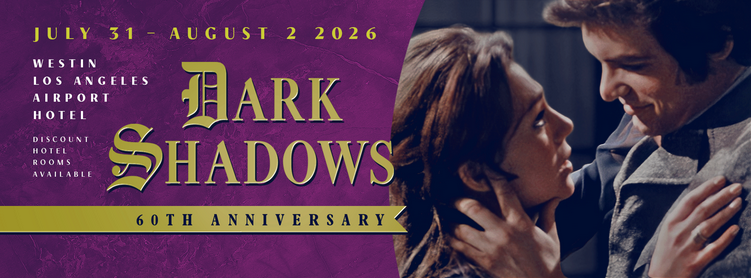
BPE: One final question about this big event coming up in July in Los Angeles. It’s being billed as the Last Dark Shadows Festival. Does that mean that you, David Selby, or some of the other actors couldn’t be cajoled into doing other events or conventions somewhere down the road?
KLS: Yes, I think some of us could. In fact every year at Halloween, I do a big event on my own at the Lyndhurst Estate in Tarrytown, New York. That’s where we filmed House of Dark Shadows and Night of Dark Shadows. I usually have upwards of 500 people there over that Halloween weekend. The fans come dressed in costume, and it’s really a lot of fun. I’ve invited other actors from the show to join me, like Marie and Sharon. Actually, I invite anybody that wants to join me. Last year we had six actors, and it was a hugely successful event. I do that every year, and I will continue hosting that event.
BPE: That’s great! I don’t think my boss will spring for travel expense to fly me out to Los Angeles any time soon, but I’m pretty certain I could convince him to front me the gas money to drive up to Lyndhurst for an overnight stay.
KLS: That would be wonderful! Those who live in Ohio, Pennsylvania, Florida, North Carolina, New Hampshire – I’ve had people from all of those places – come to the Lyndhurst event. It’s easier for them than coming out to L.A., which is why it gets such a large turnout.
BPE: Please let me know if you need a lifeless body for that Halloween happening. Playing a murder victim on an episode of Homicide remains one of my favorite TV gigs. Besides, friends say I never looked so natural.
KLS: HA!
BPE: Thank you so much, Kathryn. It’s been a real joy to speak with you today, and to learn a little bit more about about you and Dark Shadows. You’ve been very gracious with your time, and this has been a most fascinating interview. Have fun with the big event in L.A., and I’ll look forward to meeting you in person this fall in New York.
KLS: Me too!
© Copyright 2026 Baltimore Post-Examiner. All Rights Reserved
* * * * *
Anthony C. Hayes is an actor, author, raconteur, rapscallion and bon vivant. A one-time newsboy for the Evening Sun and professional presence at the Washington Herald, Tony’s poetry, photography, humor, and prose have also been featured in Smile, Hon, You’re in Baltimore!, Destination Maryland, Magic Octopus Magazine, Los Angeles Post-Examiner, Voice of Baltimore, SmartCEO, Alvarez Fiction, and Tales of Blood and Roses. If you notice that his work has been purloined, please let him know. As the Good Book says, “Thou shalt not steal.”