
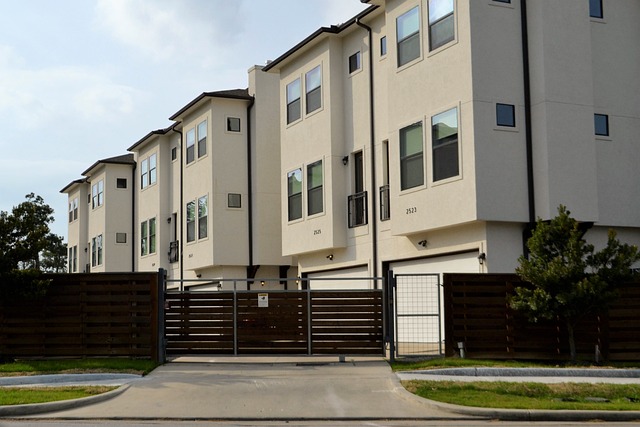
Baltimore is 2026’s second worst real-estate market
WalletHub compared 300 cities across 17 key metrics. The data set ranges from median home-price appreciation to housing affordability to job growth.
Health of Baltimore’s Real-Estate Market (1=Best; 150=Avg.):
- 291st – Share of Seriously Underwater Mortgages
- 80th – Median Days on the Market
- 258th – Median Home-Price Appreciation
- 263rd – Job Growth Rate
- 280th – Foreclosure Rate
- 285th – % of Delinquent Mortgage Holders
- 66th – Home Price as % of Income
- 264th – Maintenance Costs as % of Income
Baltimore ranks 299th overall and 68th among large cities.
For the full report, please visit:
https://wallethub.com/edu/
Key takeaways and WalletHub commentary are included below in text and video format.
 “Current home prices are extremely important, but there’s much more that you need to look at when determining the health of a city’s real estate market. Factors like the cost of living, the potential for the value of homes to increase, the availability of recently-built homes and the quality of the city’s job market are all important to consider in conjunction with asking prices and interest rates. The best cities may not always be the cheapest, but they offer excellent housing options and long-term stability.”
–
“Frisco, TX, has the best real-estate market, with the highest share of houses that were built between 2010 and 2024, at nearly 47%. Frisco is also an affordable place to live. When you look at home prices as a percentage of income, the city is the 95th-cheapest among the 300 cities in our study. But it’s the 11th-cheapest city for phone service and the 11th-cheapest for maintenance and energy. Finally, Frisco has the seventh-best job growth rate in the country, which helps attract new residents to its growing housing market.”
– Chip Lupo, WalletHub Analyst
Expert Commentary
Is now a good time to buy a home? What economic indicators should potential buyers be watching?
“Yes, now is always the best time to buy a home. The importance of buying a home cannot be underestimated. Some of the main reasons to purchase a home have nothing to do with whether or not it is financially a good time. Think of the benefits; 1) moving is stressful; staying in one place stops the constant worry and chaos that comes with moving, 2) a permanent home gives all family members a safe reliable space to concentrate on growing and prospering, 3) educationally, children greatly benefit by focusing on their schoolwork rather than the constant learning and adapting to different environments.”
Edward Re – Adjunct Professor, Pratt Institute
“Buying a new home decision depends on your current and future income, the location, and many other variables that one should consider. Most of us will have to finance such a large purchase, thus interest rates play a crucial role in houses’ total cost. Having said that, perhaps the current mortgage rates should be a very important variable one needs to consider when buying a home. Those rates really determine the future value of the purchasing price.”
Dr. Miren Ivankovic – Professor, Anderson University
How has inflation affected housing prices and the home-buying process? What changes should we expect on the housing market during the upcoming months?
“Inflation has seriously affected housing prices by increasing the importance of two categories, homes that require modernizing and homes that are ready to move in. Simply put, people are scared of construction and renovation. Materials and labor prices have increased substantially faster than any and all government supplied inflation statistics. Competent labor has gotten not only harder to find but substantially less affordable. The largest change that has already taken effect in the housing market is the importance of these two categories, homes that need work and homes that don’t.”
Edward Re – Adjunct Professor, Pratt Institute
“That depends on the region of the country, but in general, homes are more expensive than some years ago. One of the reasons is that new homes are much larger than homes previously built. But inflation does contribute to the higher price levels, as well. With inflation above Fed Res targeted 2% per year, mortgage rates are elevated (based on the federal funds rate), and that makes buying a home more expensive. It is never easy to predict the future, but the rate of inflation is slowly coming down, and if the energy prices stabilize in the near future, we should expect mortgage rates to drop some, which would make buying a home a bit more affordable.”
Dr. Miren Ivankovic – Professor, Anderson University
Why are Millennials still sitting out of the housing market? What can be done to increase homeownership rates for this cohort?
“Millennials are not ‘sitting out’ of the housing market, millennials have been ‘pushed out’. Today’s housing problem is not a lack of houses. Today’s housing problem is the lack of apartments. Governmental policies discouraged the building and ownership of apartment buildings and multifamily dwellings alike. The constant bombardment of oppressive governmental policies forced upon landlords has discouraged the building of apartments. Millennials need apartments for transitional housing, i.e., going from their parent’s family home to marrying and needing their own home. Apartments are transitional housing to millennials and there are just not enough apartments.”
Edward Re – Adjunct Professor, Pratt Institute
“Many are either renting or living in their parents’ homes. Perhaps they are waiting for homes that are less expensive. Many in that cohort are also not married nor have children, thus the demand for a new home is pretty low. I think if the interest rates decrease, future values of the new homes will decrease as well, and we should see an increase in home buying.”
Dr. Miren Ivankovic – Professor, Anderson University